






Pesticide / Biocide Residues in Food and the Environment
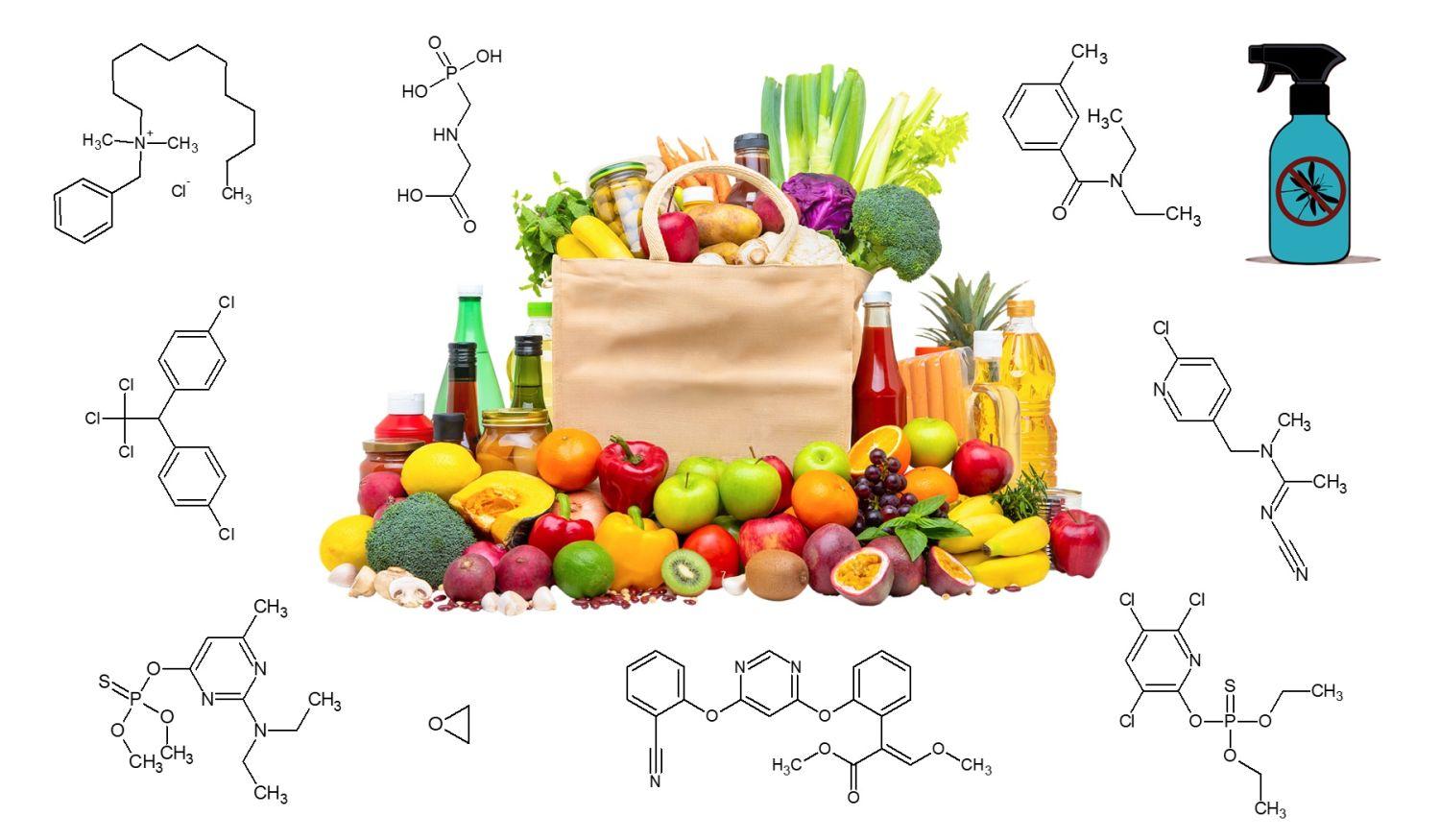
The production of agricultural crops and various natural materials still relies on the use of pesticides, including herbicides, fungicides, insecticides, acaricides, plant growth regulators, and repellents. Unlike persistent pesticides, such as DDT and other chlorinated insecticides, which are now banned, currently registered pesticides gradually break down due to various physicochemical factors (e.g., sunlight and rain) or are metabolized by plant or microbial enzymes when used in accordance with Good Agricultural Practices (GAP). These processes lead to residue levels that are often either undetectable or very low. However, given the presence of pesticide residues in food, especially when multiple pesticides are present simultaneously ("cocktails"), potential health risks associated with chronic dietary exposure cannot be ruled out. In line with current trends toward reducing the environmental burden of contaminants, efforts to minimize pesticide residues and promote integrated and organic food production are on the rise.
Research topics
Development and Optimization of Analytical Methods
Monitoring of Pesticide Residues in Food, Natural Raw Materials, Tableware, Water, and Other Environmental Samples
Pesticide Residue Control in Various Agricultural Crop Protection Systems
Study of the Fate of Pesticide Residues After Application to Plants and in the Environment
The Effect of Food Processing Technologies on Pesticide Residue Levels
Estimation of Dietary Exposure to Pesticide Residues
Czmorik Ludvickova E., Schusterova D., Mraz P., Ryparova Kvirencova J., Dzuman Z., Han J., Kocourek V., Hajslova J., Hrbek V.: Comprehensive study on pesticide residues and mycotoxins in freeze-dried strawberries and raspberries. Food Chemistry (2026) 525, 150406. (doi: 10.1016/j.foodchem.2026.150406)
Schusterova D., Drabova, L., Han J., Mraz P., Hrbek V., Kocourek V., Hajslova J.: Pesticide residues in breadseed poppy and the associated risks of exposure for the Czech population. Food Control (2026) 185, 112071. (doi: 10.1016/j.foodcont.2026.112071)
Han J., Schusterova D., Binova Z., Kocourek V., Hajslova J., Uttl L.: Challenges in quality and safety analysis of fresh chili and powder thereof. Journal of Chromatography A (2025) 466423. (doi: 10.1016/j.chroma.2025.466423)
Schusterova D., Han J., Kulma M., Kosek V., Kourimska L., Jursik M., Hajslova J.: Uptake of pesticide residues from feed by Jamaican field crickets (Gryllus assimilis) and yellow mealworms (Tenebrio molitor). Food Chemistry (2025) 494: 146190. (doi: 10.1016/j.foodchem.2025.146190)
Horska T., Stara J., Kocourek F., Uttl L., Han J., Kocourek V., Hajslova J., Hanackova Z., Schusterova D.: Dissipation of Triazole Fungicides in Apples. Foods (2025) 14(18): 3210). (doi: 10.3390/foods14183210)
QL26020165 Environmentally friendly technological practices in the protection of field vegetables minimizing pesticide residues in the product (Ministry of Agriculture, 2026-2029)
LUC25123 Exploring Nutritional Benefits and Tracking Contaminants in Bee Products (MSMT, 2025-2027)