


























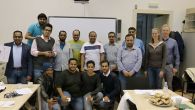
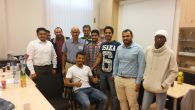

Tue 08.09.2020Training on analytical approaches for food safety, authenticity and quality assessment
Wed 11.09.2019Training on analytical approaches for food safety, authenticity and quality assessment
 RAFA 202612th International Symposium on RECENT ADVANCES IN FOOD ANALYSIS will take place on 3 - 6 November 2026 in Prague
 AOAC INTERNATIONAL 2024 Annual Meeting
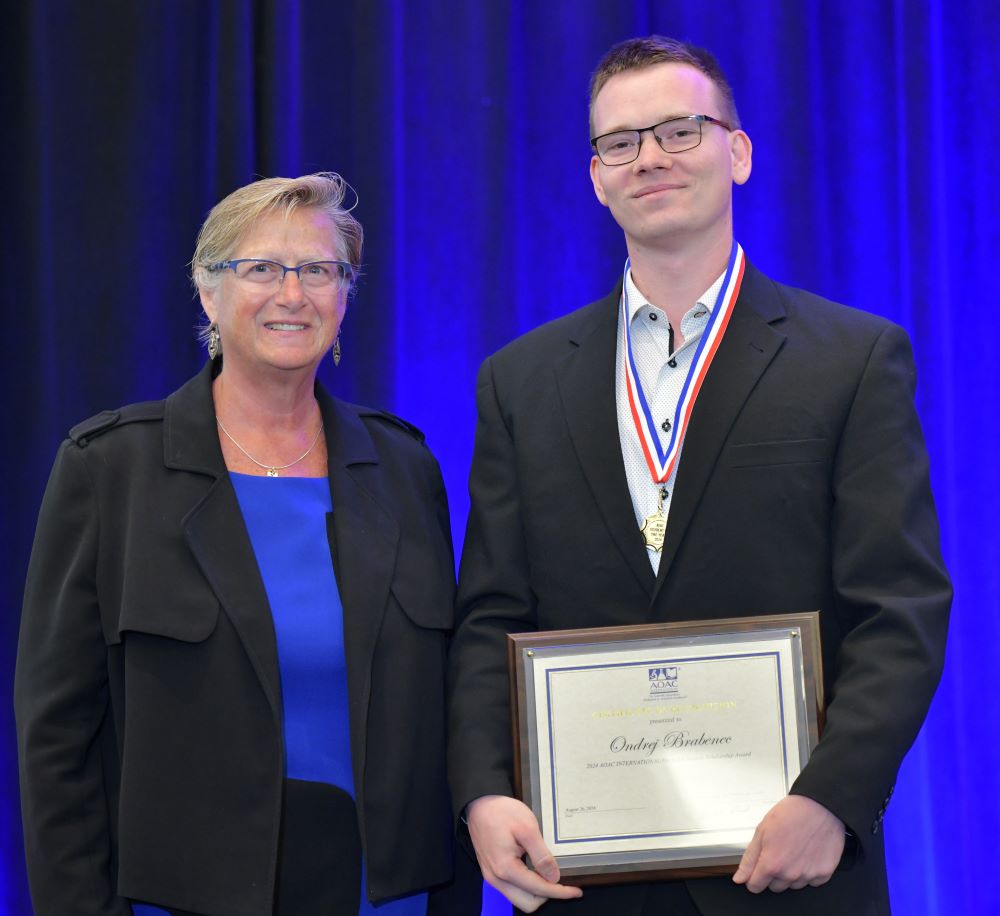
The AOAC INTERNATIONAL/Herbalife Scholarship, supported by contributions from Herbalife and designed to encourage student researchers who are advancing analytical or molecular (DNA) testing in herbal or dietary supplements, was awarded to Ondrej Brabenec, University of Chemistry and Technology (UCT), Prague, Czech Republic. Congratulations!

 Training in sensory analysis for small food producers in Moldova
In mid-September 2021, training was provided for local food producers in Moldova and representatives of the Katalyst Kitchens incubator in sensory analysis and the possibilities it provides for assessing the quality of food products. It was an activity within the joint project “Ecological product innovation lab at the Moldovan Agri-food Business”, the training was carried out by Marek Doležal, Zdenka Panovská and Vojtěch Ilko from the Department of Food Analysis and Nutrition.
A manual for sensory analysis translated into Moldovan was also prepared for the participants of this training. Producers who provided samples of their products (oils) also had the opportunity to get acquainted with the results of analyzes performed by the UCT Prague team and thus verify the quality of their products.
More information can be found HERE
The project “Ecological product innovation lab at the Moldovan Agrifood Business Incubator“ is implemented by the United Nations Development Programme (UNDP) with the financial support of the Ministry of Foreign Affairs of the Czech Republic.
Fighting Food Fraud with Authentication Using Non-Targeted Screening
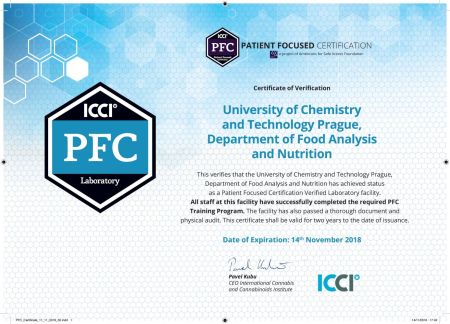 UCT Prague: first European laboratory for medical cannabis products
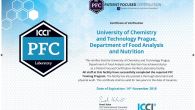
Prague – The Department of Food Analysis and Nutrition at the University of Chemical Technology, Prague, led by Professor Jana Hajslova, became Europe’s first laboratory for medical cannabis products to receive Patient Focused Certification (PFC), a quality standard issued by the American Herbal Products Association (AHPA) and the American Herbal Pharmacopoeia (AHP) Cannabis monograph.
The only other five certified laboratories in the world are all located in the USA.
"PFC serves both government authorities and end users. It guarantees that medical cannabis products have the strength, composition, purity, and identity they claim to constitute or possess," said Dr. Jahan Marcu, chief auditor for Americans for Safe Access Foundation (ASAF).
"This is the first laboratory which passed certification with flying colors. Industrial and academic laboratories in the United States could learn from Professor Hajslova," he added at a talk at UCT Prague’s Department of Food Analysis and Nutrition.
ASA works closely with the International Cannabis and Cannabinoids Institute (ICCI), a center of excellence for cannabis and cannabinoids research initiated to share experiences in clinical and basic research, medical informatics, administration, legislative efforts and studies, product security protocols, and the production and distribution of cannabis products.
New PhD topicsNew PhD topic for the study programme Food and Natural Products has been announced on the UCT web
 Aristeidis Tsagkaris Aris collaborates on the international Beagle project
As part of the international BEAGLE project, which aims to connect academia with industry, Aristeidis Tsagkaris participated in the selection process. His video summarizing proposed research activities advanced to the next round of evaluation. Currently, there are 60 candidates that inquire to match with an industry partner. Of them 20 projects will be selected to be potentially supported under Horizon Europe.
 Early Career Scientist Event 2025: Food Safety for Tomorrow – Uncovering Hidden Risks, Shaping Safer Futures
 Science Spotlight by Technology Networks, RAFA 2024 media partner
Video poster with Tereza Jaegerova on topic Characterization of secondary metabolites of dyer´s alkanet (Alkanna Tinctoria) possessing antimicrobial activity
The roots of Alkanna tinctoria were used mainly as a source of natural red pigments, however, several research papers pointed towards various bioactive properties, such as antimicrobial, anti-inflammatory, and antioxidant. Nonetheless, the chemical profile of the roots has not been studied in detail yet. Our study aimed to investigate the antimicrobial activity of different root extracts against 7 pathogens and identify the bioactive compounds. According to the results, the aqueous root extract did not show antimicrobial activity at all, while the ethanolic and isopropanol-hexane extracts showed comparably strong inhibition of the growth of Gram-positive bacteria Staphylococcus aureus, Bacillus subtilis, and Cutibacterium acnes. Using these extracts, a fractionation method on preparative HPLC was developed and the obtained fractions were further tested on the inhibitory activity. Bioactive fractions were then analyzed by targeted screening using UHPLC-ESI-QTOF-MS/MS. While no phenolic compounds were identified in the fractions, the analysis revealed the presence of several naphthoquinones, of which alkannin and β,β-dimethylacrylalkannin were confirmed by a certified reference standard. The inhibitory activity of Alkanna tinctoria roots against Cutibacterium acnes is reported for the first time.
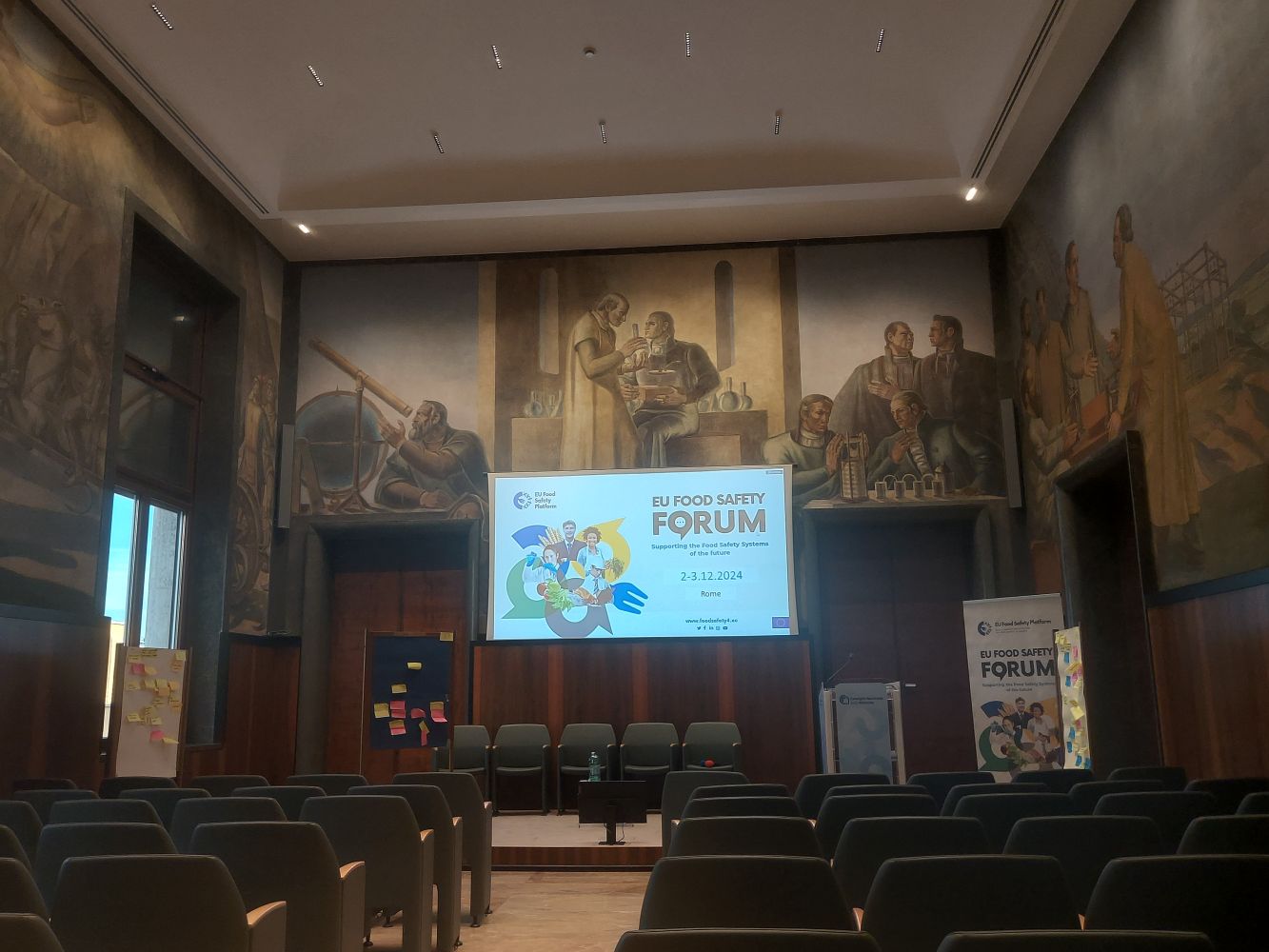
 Food Safety Forum 2024
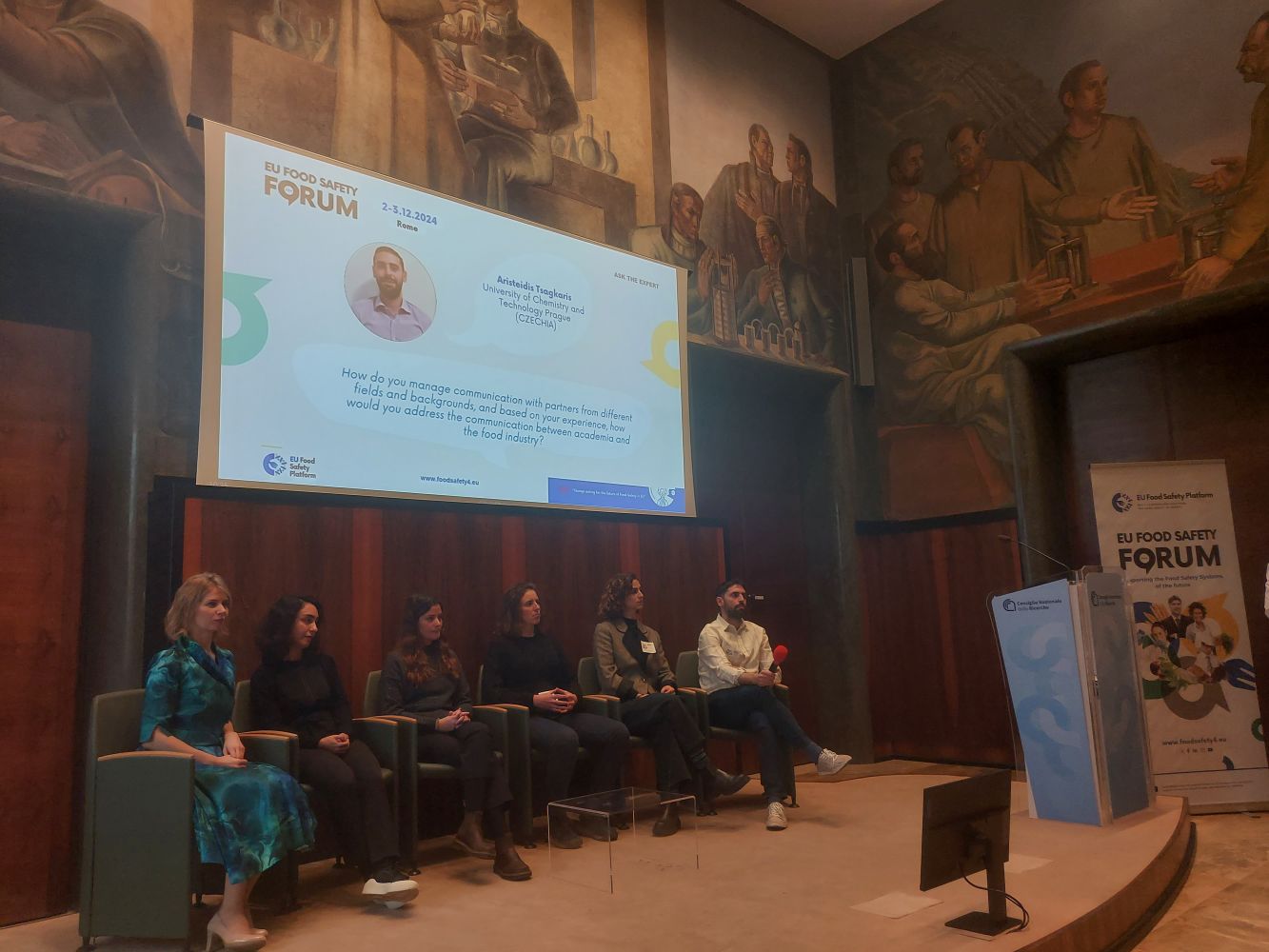
2nd Food Safety Forum 2024 was organised in Rome, 2. - 3. 12. 2024. Forum connects scientists, academia, research organisations, representatives of laboratories, food safety agencies, government, EFSA, industry and many others. By integrating expertise, fostering innovation, and promoting collaboration, these participants and organizations collectively support ensuring a safer, more sustainable European food safety framework.
Keywords identified during interactive sessions and representing the most important aspects for shaping food safety system in future are addressing:
- Sustainability
- Collaboration
- Innovation
- Regulatory Compliance
- Data Transparency and Traceability
- Education and Training
Monika Tomaniova moderated session „Networking space for the EU FOOD SAFETY PLATFORM“.
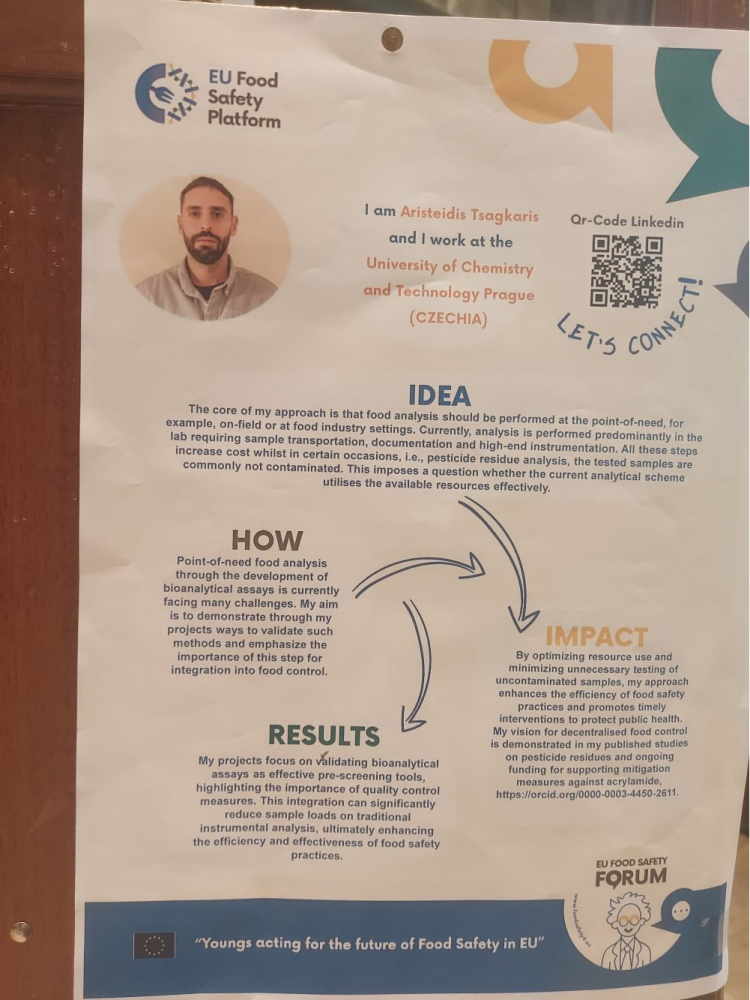
Aristeidis Tsagkaris presented his research activity in the session dedicated to „Youths in action for the future of Food Safety in the EU“.
 RAFA 202411th International Symposium on RECENT ADVANCES IN FOOD ANALYSIS will take place on 5 - 8 November 2024 in Prague
 New PGS studentA new PhD student Alessandro Volkov joined our department on March 1 as a part of the European project BIOTOXDoc.
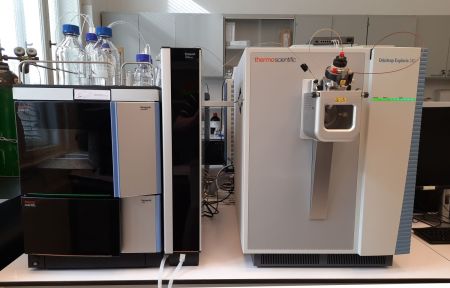 New instrument
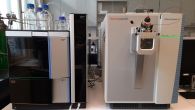
Ultra-high performance liquid chromatograph Vanquish Horizon with high resolution tandem mass spectrometer Exploris 240 (U-HPLC‒HRMS/MS) is a modern, user-friendly instrument enabling chromatographic separation at very high operating pressures, ionization using electrospray (ESI), or atmospheric pressure chemical ionization (APCI). Detection is performed using a high-resolution orbitrap mass analyzer with a resolution of up to 240,000 FWHM. High precision of the detected ions m/z is achieved through the built-in autocalibration module (EASY-IC) that can be utilized before and during the analysis. The measuring PC and the available powerful data processing station are equipped with specialized software for handling extensive data.
The instrumentation is utilized at the Department of Analytical Chemistry and in the field of metabolomic analysis, ultra-trace analysis, and it is also used for the identification of unknown compounds.
 New Erasmus+ KA220 Cooperation Partnership projekt VISIONAIR
 PhD position in the MSCA-Doctoral Network BIOTOXDoc (Plant Toxin Topics)
About the Project
One PhD position at the Department Food Analysis and Nutrigion, University of Chemistry and Technology, Prague, is open for application within the Marie Skłodowska-Curie Actions-Doctoral Network 'BIOTOXDoc'.
MSCA-Doctoral Networks aim to train entrepreneurial, innovative and resilient doctoral candidates, able to face current and future challenges and to convert knowledge and ideas into products and services for economic and social benefit. The overarching theme of the BIOTOXDoc project is the generation of safe food in a world of changing climate. As such the doctoral training programme aims develop novel control, mitigation and risk assessment methods for biotoxins (mycotoxins, phycotoxins and plant-derived toxins)
Topic: plant alkaloids in the European food supply and changes during food processing
Condition: Applicants must not have lived/studied/worked in Czech Republic for more than 12 months within the last three years; candidates from any country can apply
Application deadline: September 30, 2023 (interviews will follow in October)
Proposed start of project: March 1, 2024
For detailed information and application visit https://www.biotoxdoc.eu/
Education Level: Master Degree or equivalent
Skills/Qualifications
Candidates should have a master degree in chemistry as well as a strong interest in analytical chemistry (chromatography coupled to mass spectrometry), food chemistry and toxicology.
Languages: English, Level: Excellent
Research Field: Chemistry » Analytical chemistry
Benefits
PhD project will be part of European Network, additional experience will be gained during stays (secondments) in the European Reference Laboratory for mycotoxins and plant toxins (Wageningen University and Research, NL) and at Romer Labs (Tulln, Austria).
Selection process
Application by e-mail (biotoxdoc@boku.ac.at) until September 30, 2023
On-line interviews in October 2023
Assessment day: October 23 or 24, 2023 in Tulln, Austria.
- Website for additional job details
 CRF 2023 in numbers
 CHEMICAL REACTIONS IN FOODS IXChemistry & nutrition science beyond smart food designing, 13 - 15 September 2023
Honey authenticity assessment in Australian mediaAris´s recent publication on honey authenticity assessment was reproduced by Australian media
RAFA 202210th anniversary RAFA on-site event will take place on 6 -9 September 2022
 METROFOOD-PP Final ConferenceBoosting Research and Joint Cooperation: an Agrifood System Snapshot (19 May 2022)
 UCT Prague co-coordinating the international PARC project
In May 2022, the PARC (European Partnership for the Assessment of Risks from Chemicals) project was launched, supported by the new Horizon Europe Research and Innovation Framework Program (2021-2027). The project in which UCT Prague participated, is closely linked to the European Green New Deal, aiming to significantly reduce the impact of chemicals on human health and the environment. This transnational European project involves almost 200 institutions from 28 countries and three European Union institutions.
UCT Prague (Department of Food Analysis and Nutrition) will participate in activities related to the development of new analytical methods and their application for biological and environmental monitoring of chemicals, which, due to their adverse effects on human health, are of a high concern among scientists.
“As part of the ‘Monitoring and Exposure’ work package, we will build on our experience from a previous project, HBM4EU (the European Human Biomonitoring Initiative) and will participate in surveys on the quality and comparability of data obtained from biomonitoring studies. We will also be involved in solving the issue of environmental and multi-source monitoring of per- and polyfluoroalkylated (PFAS) substances and other chemicals interfering with the endocrine system in various environmental compartments (especially water, food, air),” Prof. Jana Pulkrabová stated.
To fulfil this task, UCT Prague is part of a team that supports the development of new analytical approaches to target and non-target screening of these chemicals in the environment and biological matrices.
In the work package, “Building infrastructural and human capacities” led by the RECETOX research centre at Masaryk University in Brno, UCT Prague will also participate in capacity building and harmonization for biological and environmental monitoring, which will generate the necessary data for chemical risk assessment in Europe.
 Recent Advances in Food Analysis 2021pre-10th anniversary RAFA on-site event in 2022
 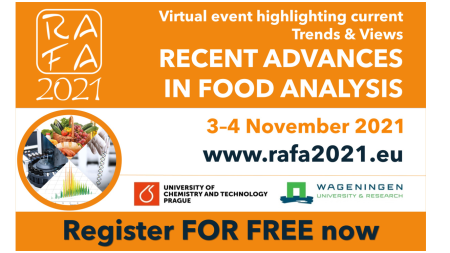 Virtual event highlighting current Trends & Views on RECENT ADVANCES IN FOOD ANALYSIS (RAFA 2021)
RAFA 2021 organizers, University of Chemistry and Technology, Prague (UCT Prague, Czech Republic) and Wageningen Food Safety Research (WFSR), part of Wageningen University & Research (The Netherlands), are delighted to invite food scientists from academia and industry, representatives of national and international agencies, control authorities, governmental and commercial laboratories to attend RAFA 2021, 3-4 November, 2021.
Considering the ongoing uncertainty with the COVID-19 pandemic situation, it has been decided not to hold a live RAFA symposium with personal (physical) participation this year. To keep RAFA community together and invite newcomers to join us, we organize an online special event “RAFA Trends & Views”.
Attending this event is free of charge for all registered participants, the deadline for free registration is November 1, 2021.
More details can be found on the RAFA 2021 website at www.rafa2021.eu.
RAFA history
RAFA has grown since the first edition launched in 2003; it has become a prestigious event attended by up to 800 participants from more than 50 countries worldwide. More than 50 sponsors, exhibitors and media partners have supported RAFA symposia (you may visit www.rafa2019.eu).
RAFA 2021 program highlights
In line with the concept of the previous events, RAFA 2021 symposium will provide an insight into contemporary trends in (BIO)ANALYTICAL STRATEGIES IN FOOD QUALITY AND SAFETY CONTROL and discuss CHALLENGES / NOVEL APPROACHES IN FOOD AND NATURAL PRODUCT ANALYSIS. Oral program will be composed only of invited lectures presented by distinguished speakers who will open discussion on current trends and their visions.
It will be accompanied with a series of webinars offered by leading companies. These vendor webinars will provide the opportunity to introduce recent instrumentation and analytical strategies for advanced food quality, safety and authenticity control. Networking and virtual meetings to enable sharing your views on presented topics will be also supported.
Next RAFA 2022 (live event)
Due to a limited format of this year RAFA, no proposals for oral and/or poster presentations can be accepted. However, RAFA Scientific Committee will give a floor to all interested researchers on occasion of the 10th anniversary RAFA that will be organised as a live event in Prague, in November 2022. The invitation to contribute to the selection of burning topics for a high end program will be launched during spring 2022.
Prof. Jana Hajslova and Prof. Michel Nielen, RAFA 2021 chairs
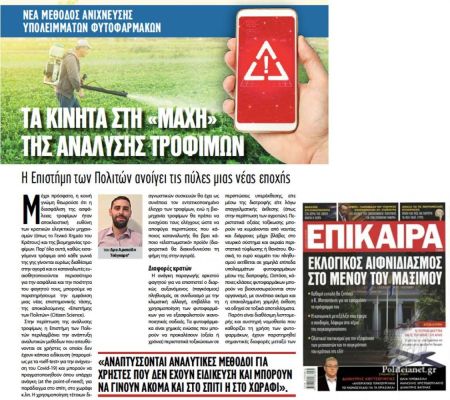 Aris Tsagkaris wrote a paper for a Greek magazine regarding his research on smartphones and food analysis
Until recently, most people believed ensuring food safety was a job for governments and industry. However, as consumers become more aware about food safety and the associated risks, we are witnessing a rise in citizen-science-based tests which will allow for affordable and sensitive on-the-go food testing. In this article, we presented how the detection of high levels of pesticide residues can be significantly improved by using portable, easy-to-use devices such as smartphones.
Training school on analytical approaches for food safety, authenticity and quality assessment
Department of Food Analysis and Nutrition, UCT Prague, organizes on 1-3 Septemer 2021 event financially supported by EIT Food „Training school on analytical approaches for food safety, authenticity and quality assessment“.


Agenda of the event is available HERE
Aim of the event is to provide an opportunity to students in the field to be trained in advanced analytical strategies applied for food safety, authenticity and quality assessment. Various case studies will be presented, including analytical methods development, data evaluation, QA/QC, … Participants will have an opportunity to meet up with the experts and learn more from other young colleagues in order to network and discuss on their current and future research activities. They will also be informed about activities of EIT Food aimed at supporting students and entrepreneurial talents.
Who should attend?
Training is targeted particularly at PhD students and postdoctoral researchers, but lower level students are also welcome, who are interested in learning more about strategies applied in food analysis, including current trends in analytical methods development, data evaluation, QA/QC, troubleshooting.
Why attend?
To meet up with the experts in the field of food safety, quality, authenticity assessment and learn more on other young colleagues and stakeholders in order to exchange on their current and future research activities.
Registration:
- FREE until 31.8.2020
- Registration form
Where the event takes place: VŠCHT Praha, Technická 3, Praha 6 – 166 28
Language of the event: Czech
In case of any questions, please contact Mrs Martina Vlckova (martina.vlckova@vscht.cz).
 Leos Uttl - winner of 2021 AOAC International / Eurofins Foundation “Testing for Life” Student Award
 Jakub Tomasko - winner of 2021 AOAC International / Herbalife Nutrition Student Scholarship
 Klara Navratilova - winner of the 2021 AOAC International/Sciex Rising Star Award
 Kateřina Šebelová was awarded by the 2021 Harvey W. Wiley Scholarship
 Harvey W. Wiley Scholarship is awarded annually in the name of Harvey W. Wiley who was one of the founders of AOAC INTERNATIONAL in 1884. AOAC INTERNATIONAL is a scientific association dedicated to promoting methods validation and quality measurements in the analytical sciences.
 International journal Toxics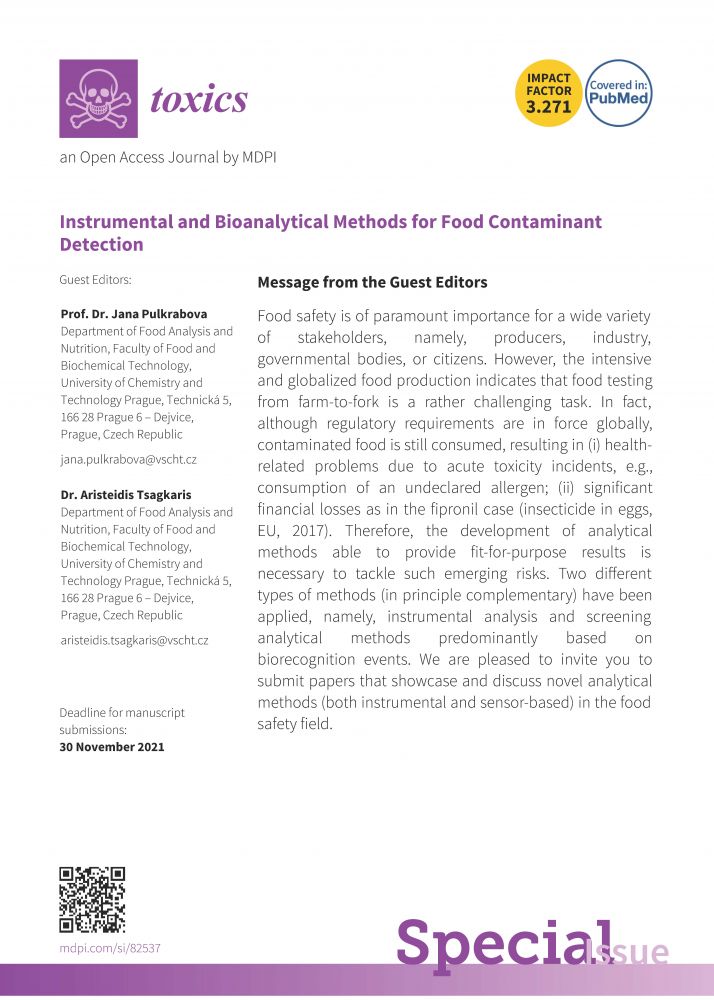
 CRF 20219th International conference Chemical Reactions in Foods IX is postponed.
 Aristeidis Tsagkaris joined the Topics Board of Toxics
AOAC Announces Katerina Mastovska as 2021 Wiley Award Winner Katerina Mastovska, graduate of UCT Prague, was honored by AOAC International for outstanding contribution to food safety
 Ecological product innovation lab at the Moldovan Agri-food Business
“Ecological product innovation lab at the Moldovan Agri-food Business” is a project aimed at creating a certified commercial kitchen and experimentation lab, set up to stimulate ecological product development, help start-ups and small producers shift to more sustainable operations, host educational events, formalize economic transactions, increase food safety and promote good practices in the food sector.
University of Chemistry and Technology, Prague, Dept. of Food Analysis and Nutrition has partnered with the Public Association Katalyst in Moldova in order to establish this ecological food fab lab and boost small business in adoption of sustainable practices. The partners plan to coach food start-ups and help implement nutritional and sensory food analysis, upgrade their product quality and reduce their environmental footprint.
As the result of the project a 72 m² shared kitchen will be established, 10 food businesses trained and coached in ecological product innovations and wide public informed about sustainable approaches in food systems. The intervention shall have a longer-term effect, since it will further stimulate ecological shift in the food industry through by becoming an integral part of the 1st Moldovan Food Business Incubator.
More information on the project and grant provided here.
The project “Ecological product innovation lab at the Moldovan Agrifood Business Incubator“ is implemented by the United Nations Development Programme (UNDP) with the financial support of the Ministry of Foreign Affairs of the Czech Republic.
ChemJets2 - new postdoc at our department
Carlos Garcia, PhD is a new Spanish junior researcher who joined our department within a project ChemJets2 at the beginning of October.
His academic background includes an Associate degree in Analytical Chemistry, Bachelor degree in Food Science and a Master degree in Molecular Biology and Biotechnology. He was awarded a PhD grant (BES-2014-069233) from the Spanish Ministry of Economy and Competitiveness and he has been working as PhD student at the Research Group on Quality, Safety, and Bioactivity of Plant Foods (CEBAS-CSIC, Murcia).
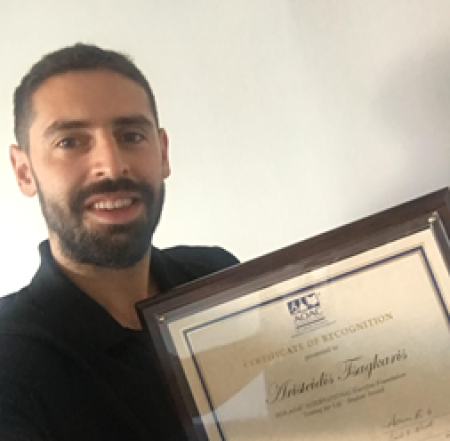 The AOAC INTERNATIONAL / Eurofins Foundation award for Aris
The AOAC INTERNATIONAL/Eurofins Foundation award recognizes up-and-coming scientists for their innovative work in life science testing. The award, supported by the Eurofins Foundation, is designed to encourage researchers who are advancing basic or applied science in analytical or molecular testing for food safety, food security, food defense, food authenticity, or health and environmental protection.
Aristeidis Tsagkaris was awarded for his work entitled “A lab-on-a-chip analytical platform with smartphone readout for acetylcholinesterase inhibitors screening”. The developed smartphone-based assay can screen for neurotoxic organophosphate and carbamate pesticides in fruits and vegetables. This screening method can be performed on-site since the paper assay is embedded into a lab-on-a-chip prototype device able to inject samples and necessary reagents on-demand. This cost-efficient (0.30 euro/per device) and rapid (results within 10 minutes) method can be used as a complementary screening tool to assist instrumental analysis by reducing the samples arriving in the lab.
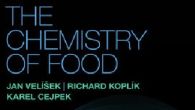
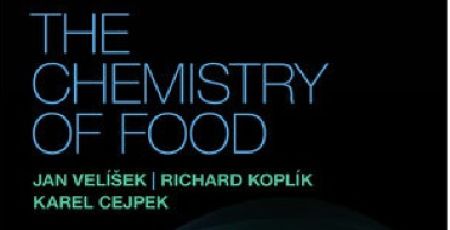 The monograph The Food Chemistry
In August 2020, John Wiley & Sons published a revised and updated second edition of the in-depth textbook of food chemistry, The Chemistry of Food. The authors of the book are Jan Velíšek, Richard Koplík and Karel Cejpek from the University of Chemistry and Technology, Prague.
The monograph of The Chemistry of Food (1,200 pages) provides a comprehensive overview of important compounds that are contained in foods and raw materials for their production. The book focuses on the structural properties of food ingredients and their chemical reactions, organoleptic properties and nutritional and toxicological significance. In addition to a detailed bibliography and index, the book contains a number of reaction schemes, figures and tables, and almost 2,000 chemical structures.
The current edition includes many new findings on food chemistry and related fields from hundreds of scientific papers published in 2012-2018. The new information relates to known as well as recently discovered food ingredients, their formation, reactivity, degradation, reactions with other compounds, but also organoleptic, biological and other important properties.
The revised second edition of The Chemistry of Food is intended for university students, teachers and workers in food research and industry. The book will provide quick guidance on almost any range of issues related to the chemical composition and chemical reactions in food.
 Training on analytical approaches for food safety, authenticity and quality assessment
Department of Food Analysis and Nutrition, UCT Prague, organizes on 8-10 Septemer 2020 event financially supported by EIT Food „Training on analytical approaches for food safety, authenticity and quality assessment“. Agenda of the event is available HERE.
Aim of the event is to provide an opportunity to PhD students and post-docs in the field to be trained in advanced analytical strategies applied for food safety, authenticity and quality assessment. Various case studies will be presented, including analytical methods development, data evaluation, QA/QC, … Participants will have an opportunity to meet up with the experts and learn more from other young colleagues in order to network and discuss on their current and future research activities. They will also be informed about activities of EIT Food aimed at supporting students and entrepreneurial talents.
Who should attend?
Training is targeted particularly to PhD students and postdoctoral researchers interested in learning more about strategies applied in food analysis, including current trends in analytical methods development, data evaluation, QA/QC, troubleshooting.
Why attend?
To meet up with the experts in the field of food safety, quality, authenticity assessment and learn more on other young colleagues and stakeholders in order to exchange on their current and future research activities.
Registration (free) - until 31. 8. 2020
Where the event takes place: http://www.vanuv-statek.cz/
Language of the event: Czech
In case of questions, please contact Mrs Martina Vlckova (martina.vlckova@vscht.cz).
ChemJets IINew JUNIOR RESEARCHER position - METABOLOMICS AND BIOMONITORING: Development of advanced analytical strategies and big data handling approaches in metabolomics
 RAFA 20199th International Symposium on Recent Advances in Food Analysis again in Prague - November 5 - 8, 2019
Department of Food Analysis and Nutrition, UCT Prague, organizes on 11-13 Septemer 2019 event finnacially supported by EIT Food „ Training on analytical approaches for food safety, authenticity and quality assessment“. Agenda of the event is available HERE.
Aim of the event is to provide an opportunity to PhD students of the University of Chemistry and Technology, Prague to be trained in advanced analytical strategies applied for food safety, authenticity and quality assessment. Various case studies will be presented, including analytical methods development, data evaluation, QA/QC, … Participants will have an opportunity to meet up with the experts and learn more from other young colleagues in order to network and discuss on their current and future research activities. They will also be informed about activities of EIT Food aimed at supporting students and entrepreneurial talents. To register for participation in this event, please contact Martina Vlckova (martina.vlckova@vscht.cz ).
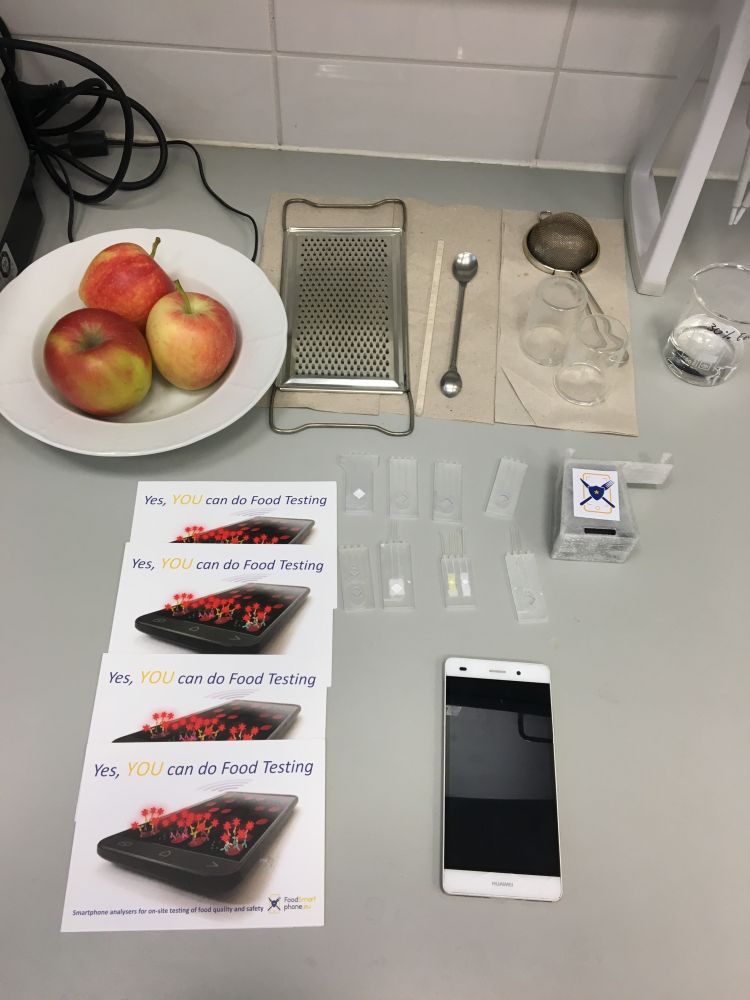
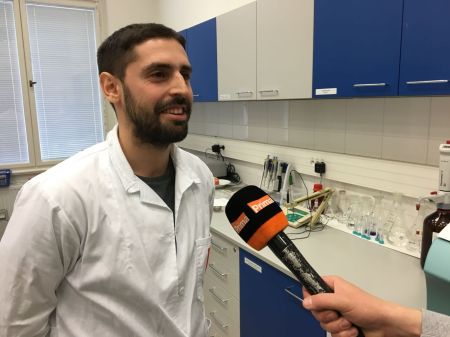 Demonstration of FoodSmartphone concept for pesticides detection
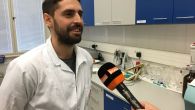
Prof. Jana Hajslova and her PhD student Aris Tsagkaris demonstrated the rapid and simple screening test for selected pesticide residues (organophosphates and carbamates) detection which is being developed within the Horizon 2020 project FoodSmartphone. You can see the news report on TV PRIMA here or the stream on facebook here .
 FoodIntegrity Handbook
Department of Food Analysis and Nutrition contributed to the publication FoodIntegrity Handbook: A Guide to Food Authenticity Issues and Analytical Solutions, which is freely available here.
 UCT Prague as EIT Food Hub
 FoodIntegrity training week
 UCT Prague, Department of Food Analysis and Nutrition, in cooperation with the EU-funded project FoodIntegrity, organizes a Training week in Prague from the 3rd to 7th September 2018.
The event consists of TRAINING SCHOOL on assuring the integrity in the food chain (3-5 September 2018), and SYMPOSIUM for Post-Graduate Students on Food Fraud (6-7 September 2018).
 METROFOODDepartment of Food Analysis and Nutrition UCT Prague has become a member of an international consortium METROFOOD.
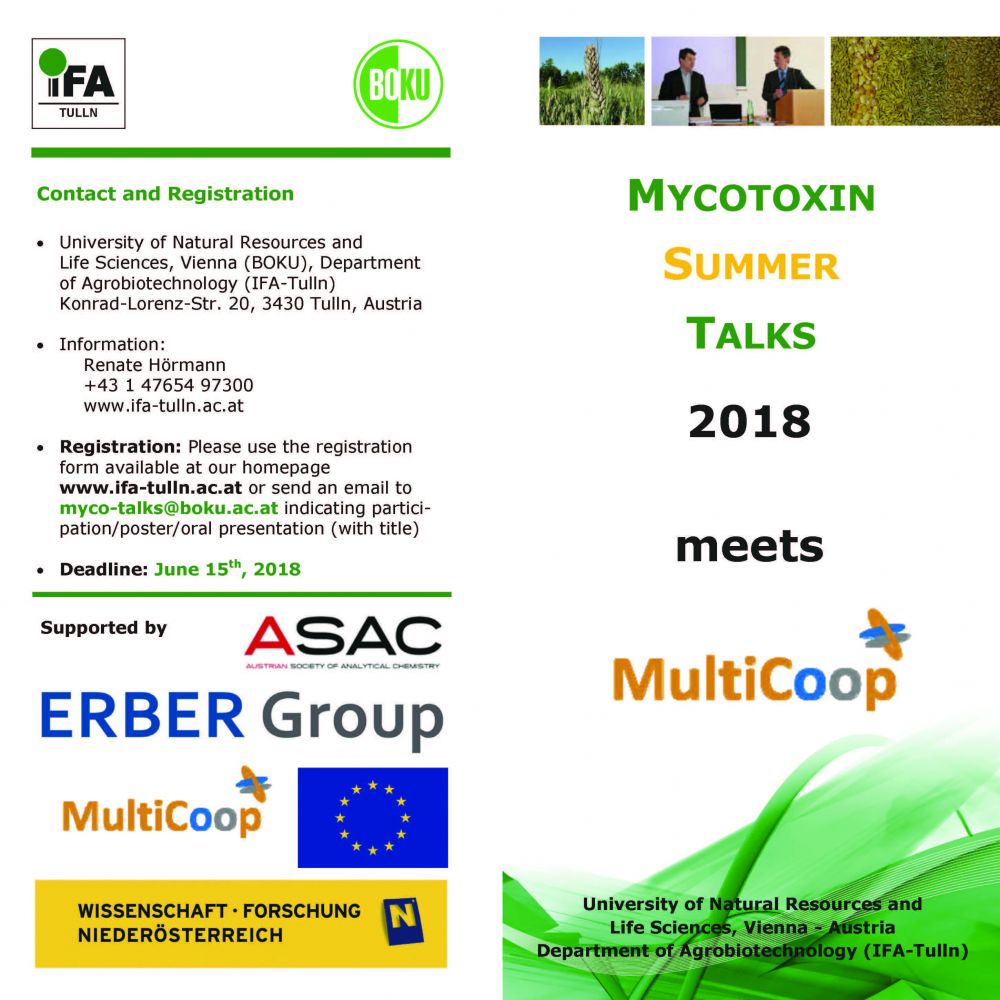
Mycotoxin Summer Talks
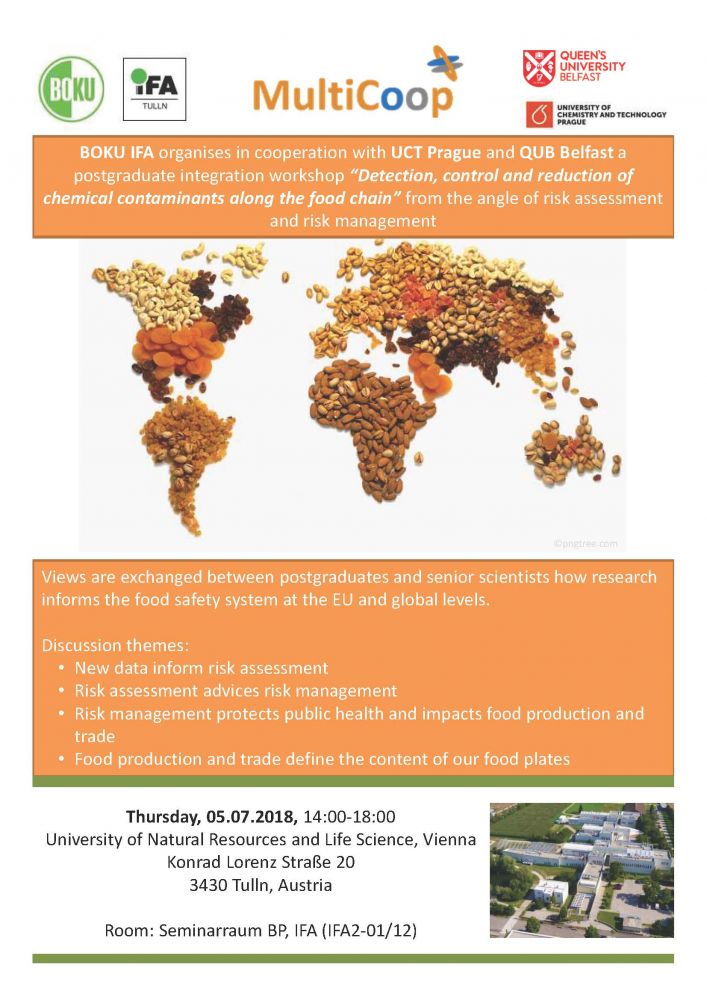
2nd MultiCoop integration workshop
 FoodSmartphone Summer School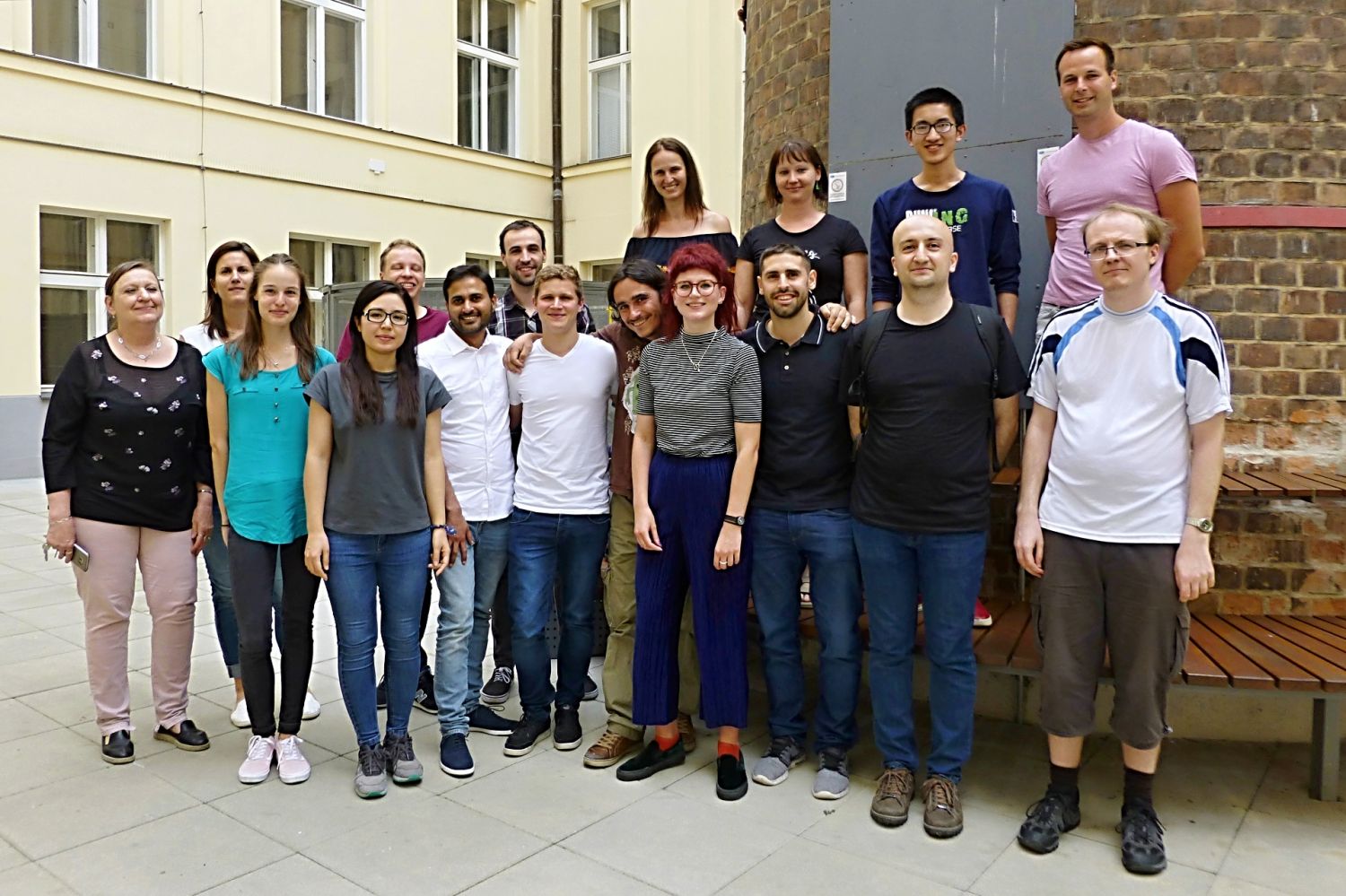
 Invitation for FoodSmartphone Summer School
FoodSmartphone Summer School: Food Applications, QA/QC and Validation will be held in June 18. - 22. 2018 at UCT Prague.
More information about summer school
FoodSmartphone Summer School is organised by the H2020 Marie-Curie project FoodSmartphone .
 National Center of International Research on Food Authenticity Technology
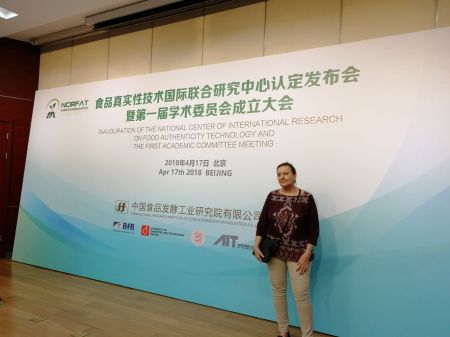
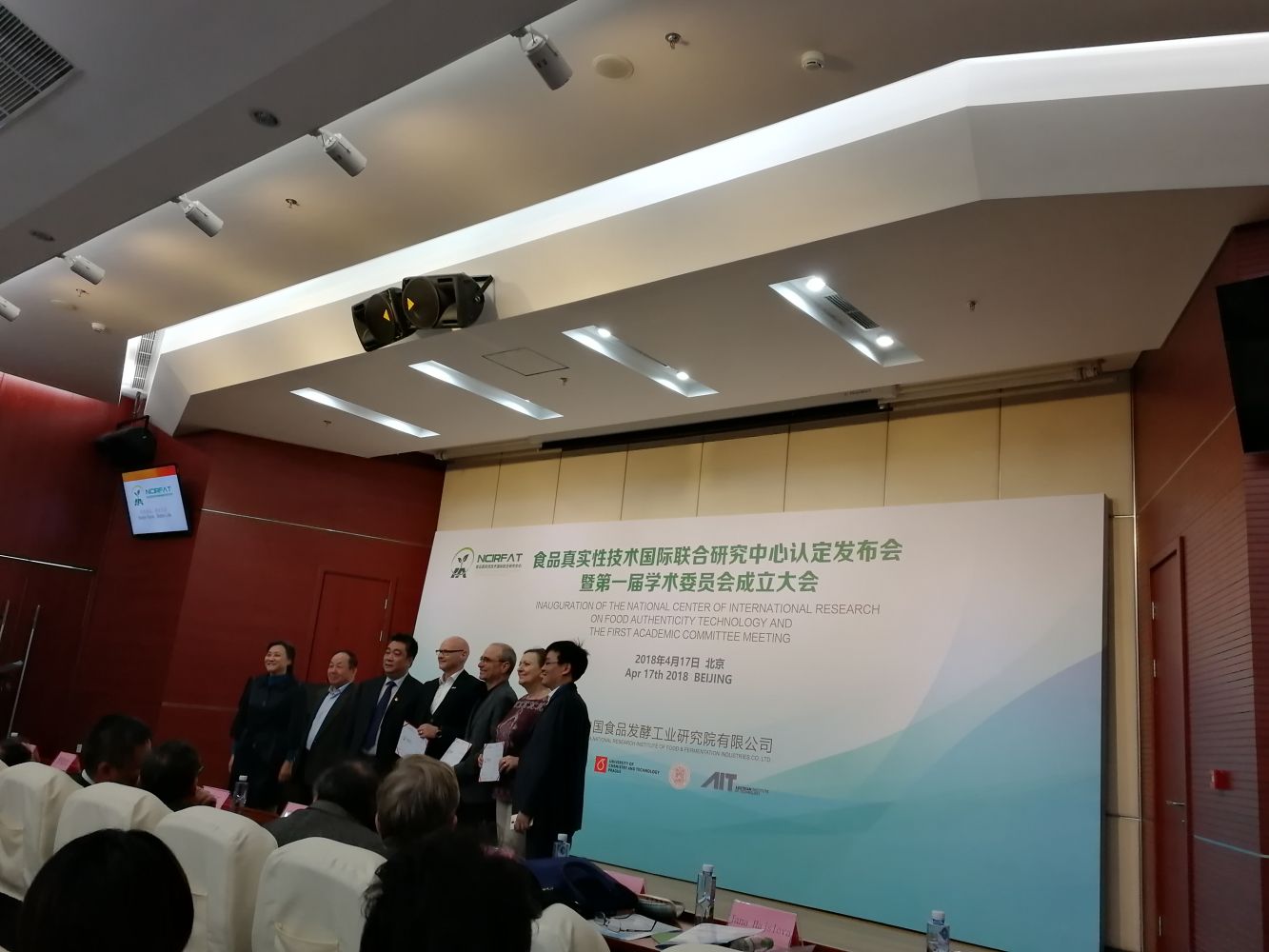
Department of Food Analysis and Nutrition, UCT Prague has supported, along with other major European organizations, the establishment of the National Center of International Research on Food Authenticity Technology in China. The ceremonial opening of the Center took place on 17.4. 2018 in Beijing. Prof. Jana Hajslova, as a member of the Academic Committee of the Center, was the honorary guest of his inauguration.


The 8th International Symposium on Recent Advances in Food Analysis (RAFA 2017) will take place in Prague, Czech Republic, on 7–10 November, 2017.
The RAFA organizers, the University of Chemistry and Technology, Prague (UCT Prague, Czech Republic) and RIKILT, Wageningen University & Research (The Netherlands), would like to invite food scientists from academia and industry, and representatives of national and international agencies, control authorities, governmental and commercial laboratories to attend this event.
RAFA has grown since the conference was launched in 2003. The previous two events were attended by 800 participants from more than 60 countries of Europe, Asia, America, Australia and Africa, and supported by more than 50 sponsors, exhibitors and media partners.
The RAFA 2017 symposium will provide an overview of contemporary trends in analytical & bioanalytical strategies in food quality and safety control and discuss challenges for novel approaches. The following recent & emerging issues will be addressed by RAFA 2017 sessions:
|
|
Workshops, Seminars, Tutorials
The conference programme will be accompanied by several satellite events alongside workshops, seminars, and tutorials on novel analytical strategies, including workshops on “Vibrational Spectroscopy and Chemometrics for the Monitoring of Food and Feed Products and Contaminants Detection” and “Analysis of Nanoparticles in Food, Cosmetics and Consumer Products” and “Human Biomonitoring of Food”. Other sessions include “Smart Portable Food Analysis Systems and Citizen Science” and “Data Quality and Smart Data Handling in Food Analysis”. There will also be an opportunity to enhance your knowledge of mass spectrometry at the RAFA Mass Spectrometry School.
An interactive seminar will discuss “Sample-prep, Separation Techniques and Mass Spectrometric Detection in Food Quality and Safety: Step by Step Strategies for Fast development of Smart Analytical Methods”.
The Reference Laboratories Colloquium will include a workshop on “Experiences, Achievements and Challenges Addressed by EU Reference Laboratories
The Food Authorities’ Summit — EU and Beyond will include a seminar from the United States Department of Agriculture (USDA) on “Food Safety Issues Beyond the EU” as well as workshops on “Food Safety in China: Past, Present and Future” and Sustainable Food Security and Quality – Challenges for Developing Countries”.
The European Food Safety Authority (EFSA) information platform on emerging food quality/safety issues of high concern will also be discussed.
An open day on food integrity will focus on the latest developments and strategies in safety, quality, authenticity and traceability and the HORIZON 2020 session will discuss the collaboration challenges within EU framework programme for research and innovation.
Vendor Seminar and Exhibition
Vendor seminars provide the opportunity for leading companies to introduce recent instrumentation and analytical strategies for advanced food quality and safety control. An exhibition of modern instruments, laboratory equipment, reference materials, and consumables used in food analysis will be an important part of the symposium.
Young Scientist Opportunities
A platform for young scientists will be offered to present their scientific work; typically 20% of the contributed oral presentations is assigned to the next generation. Also a number of RAFA 2017 Student Travel Grants will be provided. The best poster presentation(s) by a young scientist(s) will be awarded with the prestigious RAFA Poster Award and sponsored poster award(s).
In summary, RAFA 2017 will offer a high-quality scientific programme with top-quality presentations followed by stimulating discussions, a series of satellite events, a large state-of-the-art exhibition and an attractive social programme. Scientific contributions will be presented by leading scientists through keynote lectures and by contributed oral and poster presentations. The RAFA 2017 programme will be tailored to provide a lot of opportunities for networking as well as exploration of the latest results of the food analysis community.
More details can be found on the RAFA 2017 website www.rafa2017.eu.
Prof. Jana Hajslova
RAFA 2017 chairwoman
 A new Greek PhD researcher at our department
Within the new FoodSmartphone project (Horizon 2020-MSCA-ITN-2016) has a new PhD researcher, Aristeidis Tsagkaris, M.Sc., started working at our department. Aristeidis was chosen from 66 candidates from all over the world. More information about the project here.
Top New Trends in Food Quality and Safety Testing RevealedProfessors Jana Hajslova and Michel Nielen, the co-chairs of RAFA 2017, share their insights into the latest advances in food analysis
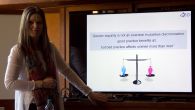
 Karen McCloskey from Queen's University Belfast
Karen McCloskey is Professor of Cell Physiology and Deputy Director of the Centre for Cancer Research and Cell Biology at Queen’s University Belfast. Since 2012, she has been Director of the Gender Equality Office in the School of Medicine, Dentistry and Biomedical Sciences.
She led the successful Athena SWAN Silver Award Applications for the School of Medicine, Dentistry and Biomedical Sciences in 2012 and 2016, working with an enthusiastic and highly-motivated Gender Equality Committee representing staff and students at all levels across the research and education units of the School. In 2016, she proposed and implemented a strategy for a Gender Equality Office in the Faculty of Medicine and Health Sciences, serving 4 Schools. Chairing the University SWAN Champions Group has provided valuable insight into the challenges faced by colleagues in other disciplines as they work towards Gender Equality and has enabled good practice to be shared across the University.
New PhD Topicsfor the academic year 2017/2018 you will find here!
 CHEMICAL REACTIONS IN FOODS VIII CRF 2017 will be held in Prague, 15 - 17 February, 2017
Defense of doctoral thesis
Diana Chrpova
Topic of doctoral thesis
Vojtech Ilko
Topic of doctoral thesis
3-Chloropropane-1,2-diol in foodstuffs and reactivity in model systems

University of Chemistry and Technology, Prague (UCT Prague) is offering a unique opportunity for an Early Stage Researcher to undertake research in the framework of the project “Smart phone analyzers for on-site testing of food quality and safety (FoodSmartphone)”. The Early Stage Researcher will be funded for 3 years by the prestigious Marie Sklodowska-Curie Actions Innovative European Training Network (MCSA-ITN-ETN-2016) programme. The successful candidate will be offered the opportunity to enrol on the following PhD programme: Enzymatic FoodSmartphone assays for AChE inhibitors (ESR 6). He/she will be an active member of a research project team assisting in the delivery of research and training activities within a specified project scope aimed to meet overall FoodSmartphone research objectives and submit a thesis in fulfilment of the requirements of a PhD degree.
Information
For more information regarding this position please contact Prof Dr. Jana Hajslova; jana.hajslova@vscht.cz or at (+420)220 443 185.
Application
Please submit your motivation letter with CV by e-mail to martina.vlckova@vscht.cz (this is the only correct way to apply) before March 27, 2017. Any applications reaching us, in any other way are not taken into consideration.
FoodSmartphone encourages qualified women, researchers from recent member states and researchers with a refugee status to apply as well. A screening research is part of the selection procedure and employment conditions at UCT Prague.
More information here
New projects BIOCOM and CONTAMMIX
Two projects for institutional cooperation (i) Deepening of cooperation in bioactive compounds research (BIOCOM – 7F16028) and (ii) Novel analytical strategies for control of contaminants mixtures in food: development of joint platform (CONTAMMIX - 7F16027), were launched at the Department of Food Analysis and Nutrition, UCT Prague in February 2017. The projects are funded by the Norwegian funds from 2009 - 2014 and the Ministry of Education, Youth and Sports under the institutional support for research and development (Czech-Norwegian research program CZ09). The projects are aimed at deepening cooperation in joint research activities between universities in the Czech Republic and Norway, University of Chemistry and Technology, Prague (UCT) and UiT The Arctic University of Norway (UiT) (project BIOCOM) and University of Chemistry and Technology, Prague (UCT) and Norwegian University of Life Sciences (NMBU) (project CONTAMMIX). This cooperation will be implemented through the mobility of students and professors and the organization of joint workshops. Based on these activities, the projects should lead to a strengthening of professional competencies of all participating universities and to support the future expansion of cooperation for research projects. Learn more at the projects websites http://biocom.vscht.cz/ or http://contammix.vscht.cz/.
Defense of doctoral thesis
Zdenka Veprikova
Topic of doctoral thesis
Mycotoxins in Food and Feed: Influence of Processing Technologies
Jana Kovacova
Topic of doctoral thesis
Innovative strategies in multidetection analysis of pesticide residues
Defense of doctoral thesis
Veronika Krtkova
Topic of doctoral thesis:
Modern analytical approaches for newly identified risks in the field of chemical food safety
Vojtech Hrbek
Topic of doctoral thesis:
Application of ambient mass spectrometry in food analysis
Modern analytical chemistry is a dynamically developing scientific discipline. Within an enormous technical progress in a recent decade, several new instrumental techniques such as ambient mass spectrometry (AMS) have been introduced at the market. Among them, direct analysis in real time (DART) ionization source coupled with high resolution mass spectrometry (HRMS) has become highly popular in many applications. The research conducted within this thesis has been concerned with employing this technique for analysis of a wide range of food matrices; the main focus was placed on food safety and/or food authenticity control.
In the first part of this thesis, DART-HRMS was employed for a rapid, high throughput analysis of food contaminants represented by natural toxins (mycotoxins) and processing contaminants (3-MCPD esters). The possibility to use this technique for screening of organic nanoparticles occurrence in fruit juices was investigated, too.
The second part of the presented thesis demonstrates the use of DART-HRMS technique for metabolomic fingerprinting enabling food fraud detection. The matrices investigated were olive oil, porcine lard and beef tallow, milk, soybeans and garlic.
The outcomes of the research work obtained within the author´s Ph.D. studies were not only presented on occasion of various international conferences/workshops, but also published in several high credit international journals. To enable the scientific community in the Czech Republic to get familiar with the key research outcomes, some key studies were also published in the Czech scientific journals.
 Announcing FoodSmartphone
The University of Chemistry and Technology, Prague (UCT Prague) participates in the new Horizon 2020 ITN project: FoodSmartphone - Smartphone analyzers for on-site testing of food quality and safety (Grant Agreement: 720325 – FoodSmartphone - H2020-MSCA-ITN) coordinated by Prof. Dr. Michel Nielen RIKILT Wageningen University & Research. The project will run from January 1, 2017, until December 31, 2020.
The consortium has been built upon highly complementary disciplines: (bio)analytical chemists, biologists, physicists, micro/nano-engineers, mathematicians, organic- and food chemists will work together on the joint supra-disciplinary goal.
FoodSmartphone offers the ESRs (early-stage researchers) an extensive programme of both mandatory and optional network-wide training events and intersectoral secondments. The scientific training in novel smartphone-based sensing technologies plus the complementary skills training provided, will have a major impact on future EU monitoring practices and, moreover, pave the road for Citizen Science.
More information on FoodSmartphone vacancies here.
UCT Prague + University of Tromsoe (Norway) - finishing of the project
UCT Prague + University of Tromsoe (Norway)
In August 2016, the one year project of institutional cooperation with the University of Tromsoe (Establishing of Institutional Cooperation Between UIT The Arctic University of Norway and the University of Chemistry and Technology in Prague in education in the field of food quality and biotechnology, NF-ICP-CZ07 3-180-2015) funded by Norwegian funds and EHP funds, Program of cooperation between schools and scholarships, was finished. The project was primarily focused on creating and strengthening partnerships between the UCT Prague and the Norwegian partner University. Within the project, several mobilities of students and professors were realized, and interactive training seminars and webinars were organized. Czech and Norwegian participants were very satisfied with the project outputs, and found it to be very useful in terms of strengthening the professional competencies of both Universities and utilization of new research-based relationships within applying for new projects. Details about realized activities can be found on the project website www.uct-uit-cooperation.eu.
Lecture of Prof. Klara Stensvåg from UiT (Arctic University of Norway)
The lecture of Prof. Klara Stensvåg from UiT Tromso on the topic "Marine bioactive compounds and potential use of marine resources" was held on 30 June 2016. Prof. Stensvåg visited UCT Prague within the project Institutional Cooperation of UCT Prague + UiT Tromso funded by Norway grants.
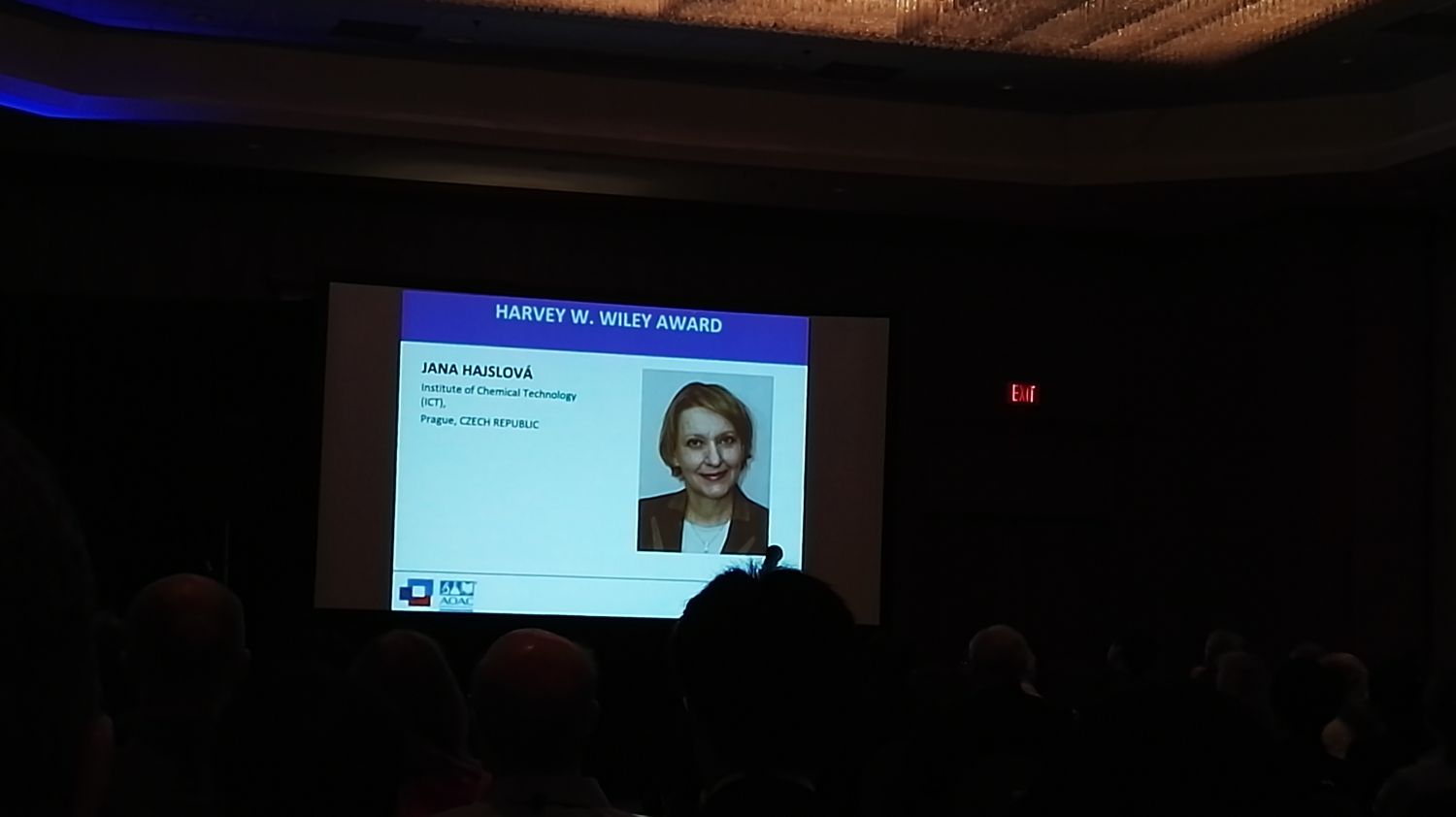
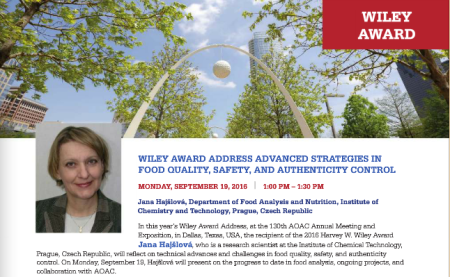 Prof. Jana Hajslova wins AOAC 2016 Harvey W. Wiley Award
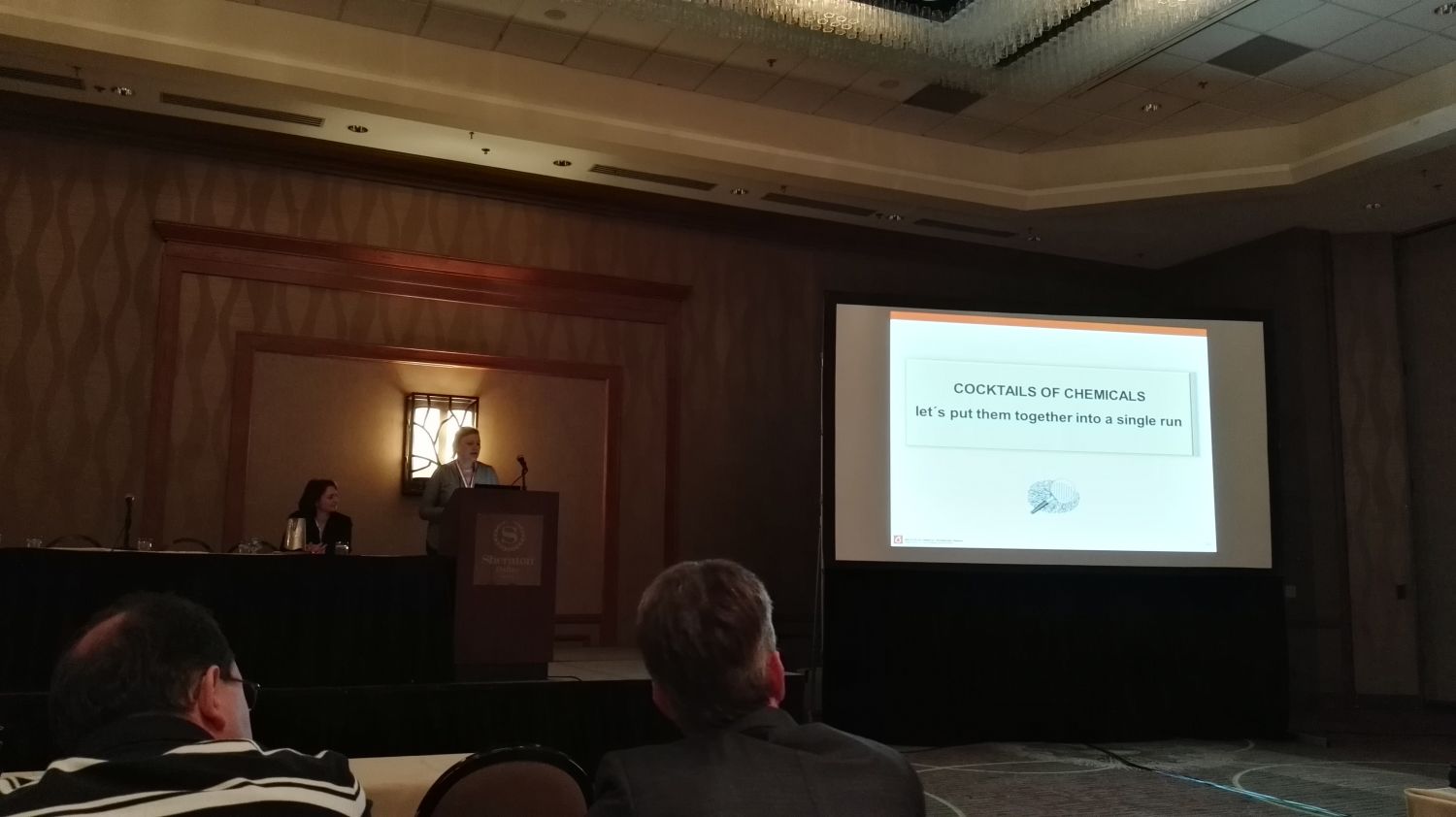
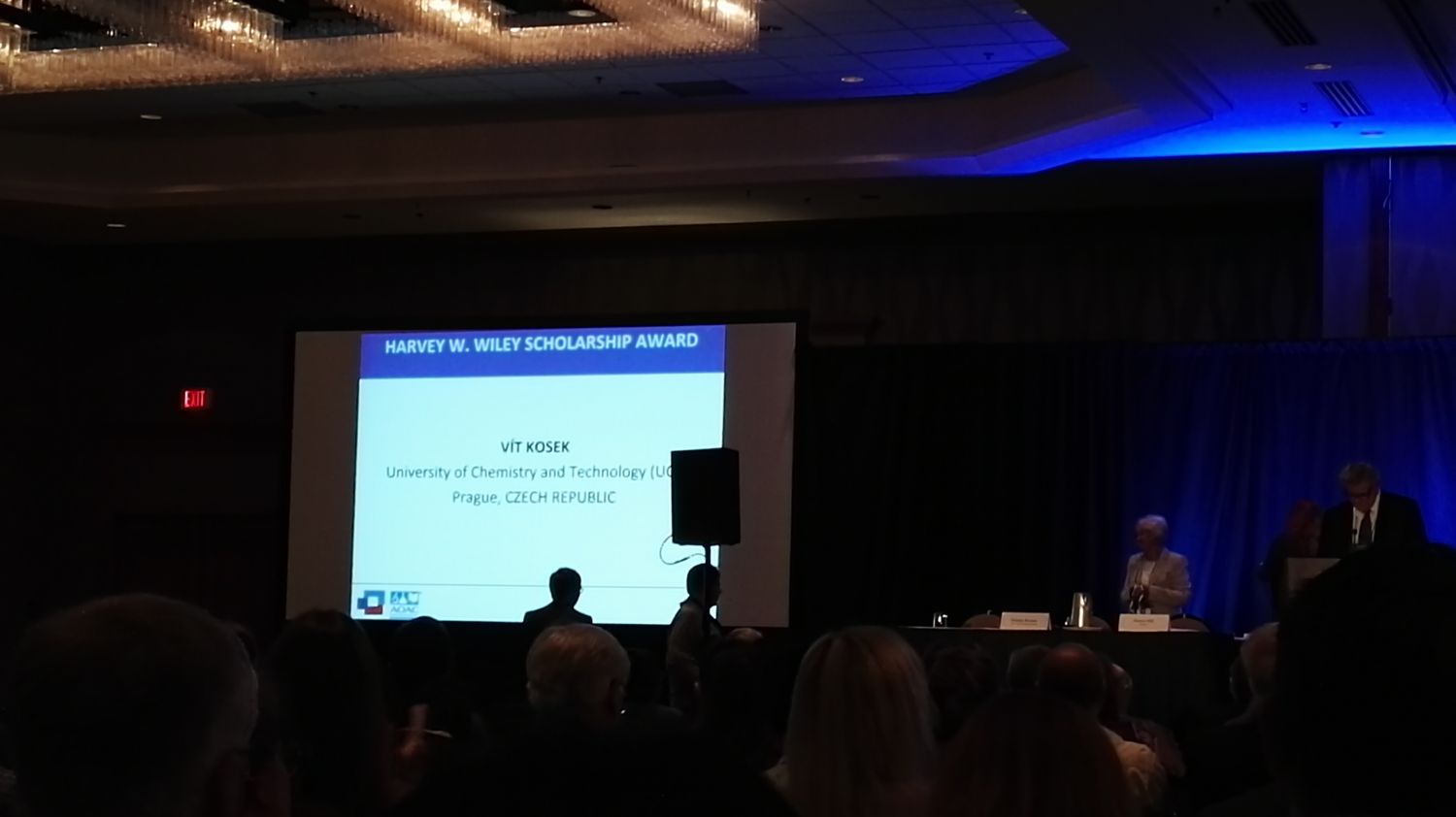
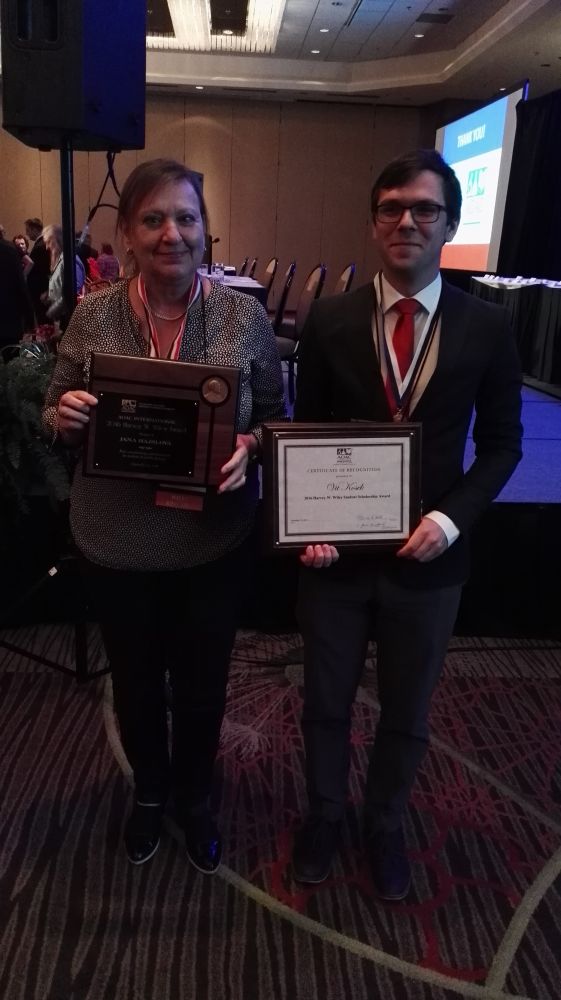
 Prof. Jana Hajslova wins 2016 Harvey W. Wiley Award - the AOAC International´s highest honor for lifetime scientific achievement. AOAC INTERNATIONAL is a globally recognized, independent, third party, not-for-profit association and voluntary consensus standards developing organization founded in 1884. When analytical needs arise within a community or industry, AOAC INTERNATIONAL is the forum for finding appropriate science-based solutions through the development of microbiological and chemical standards. AOAC standards are used globally to promote trade and to facilitate public health and safety.
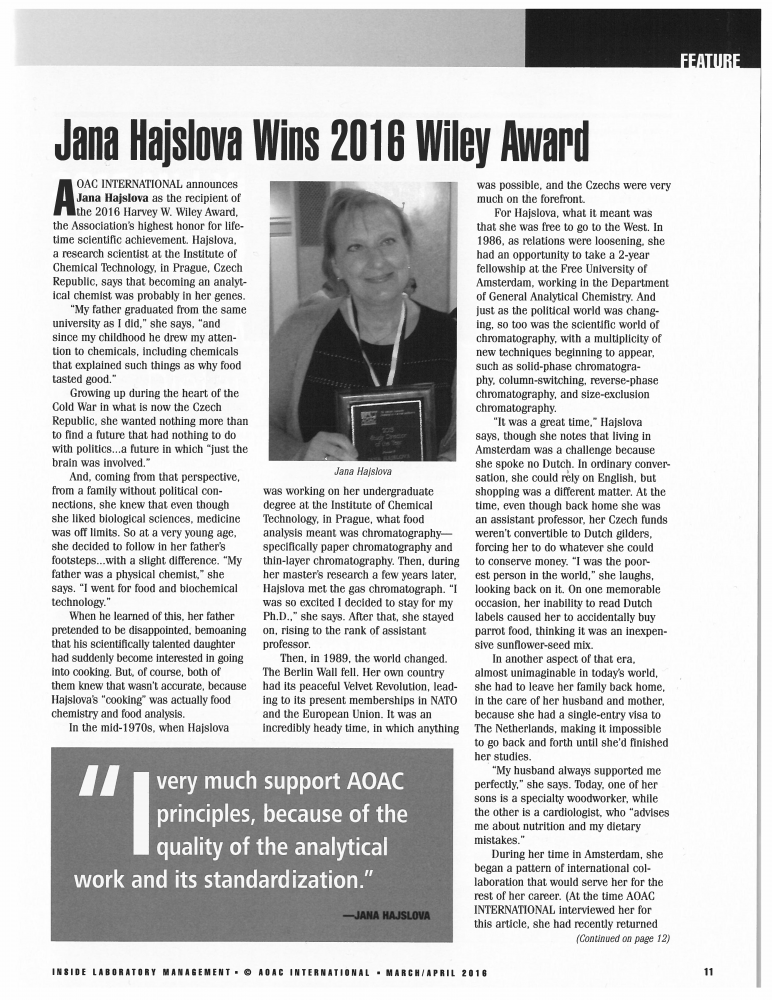
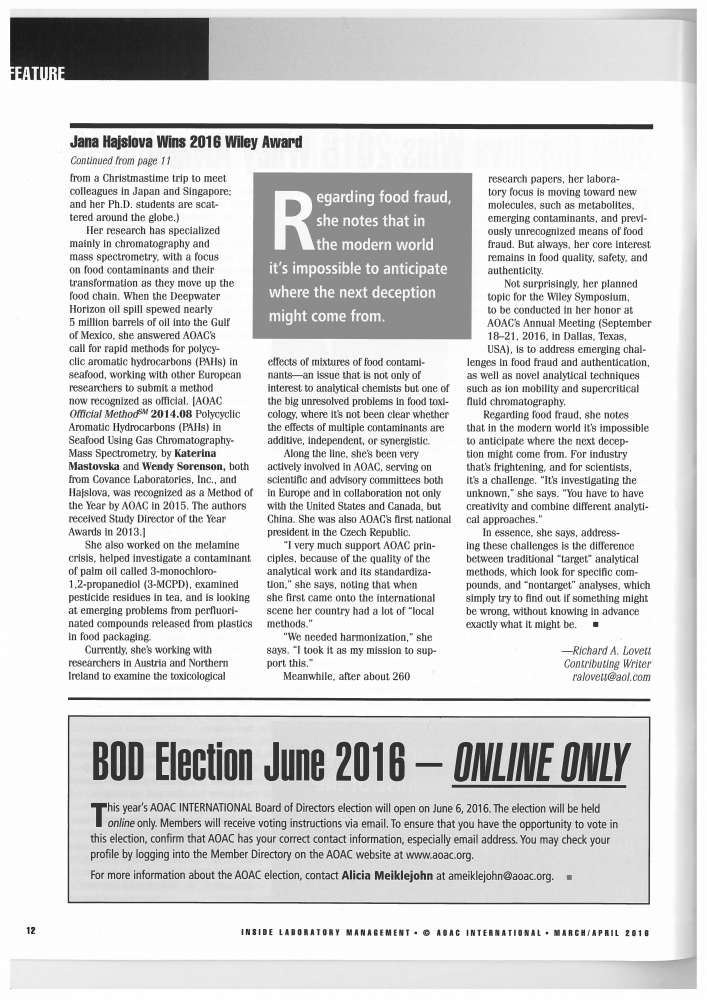
Photo gallery from the ceremony
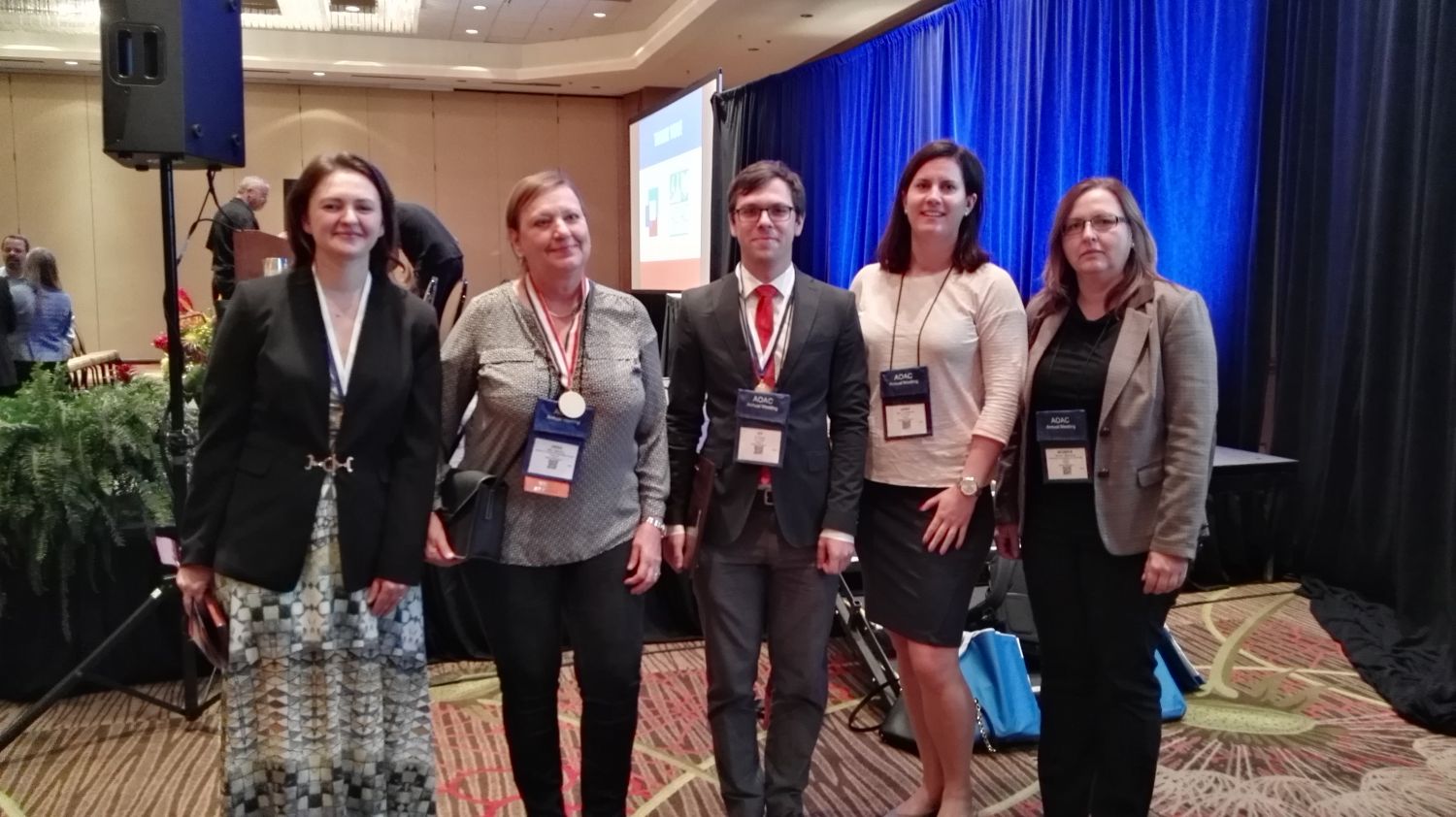
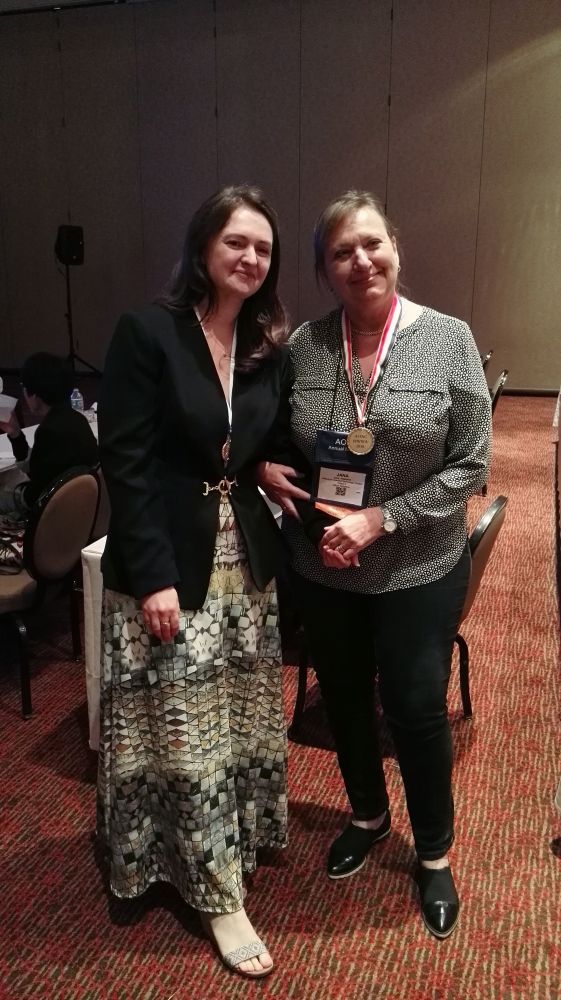
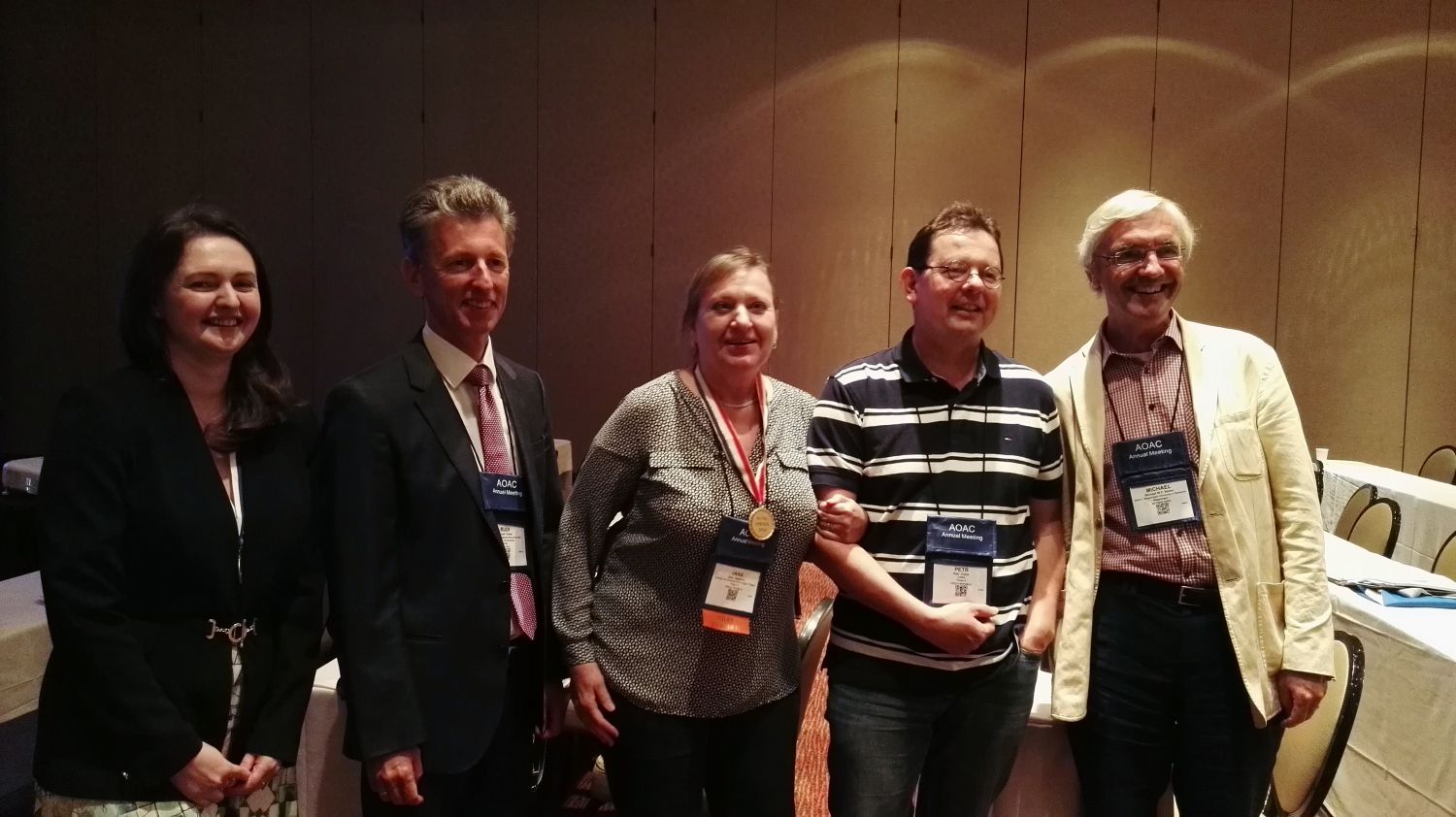
Dr. Marie Suchanova won Award for the scientific work in the field of pesticides
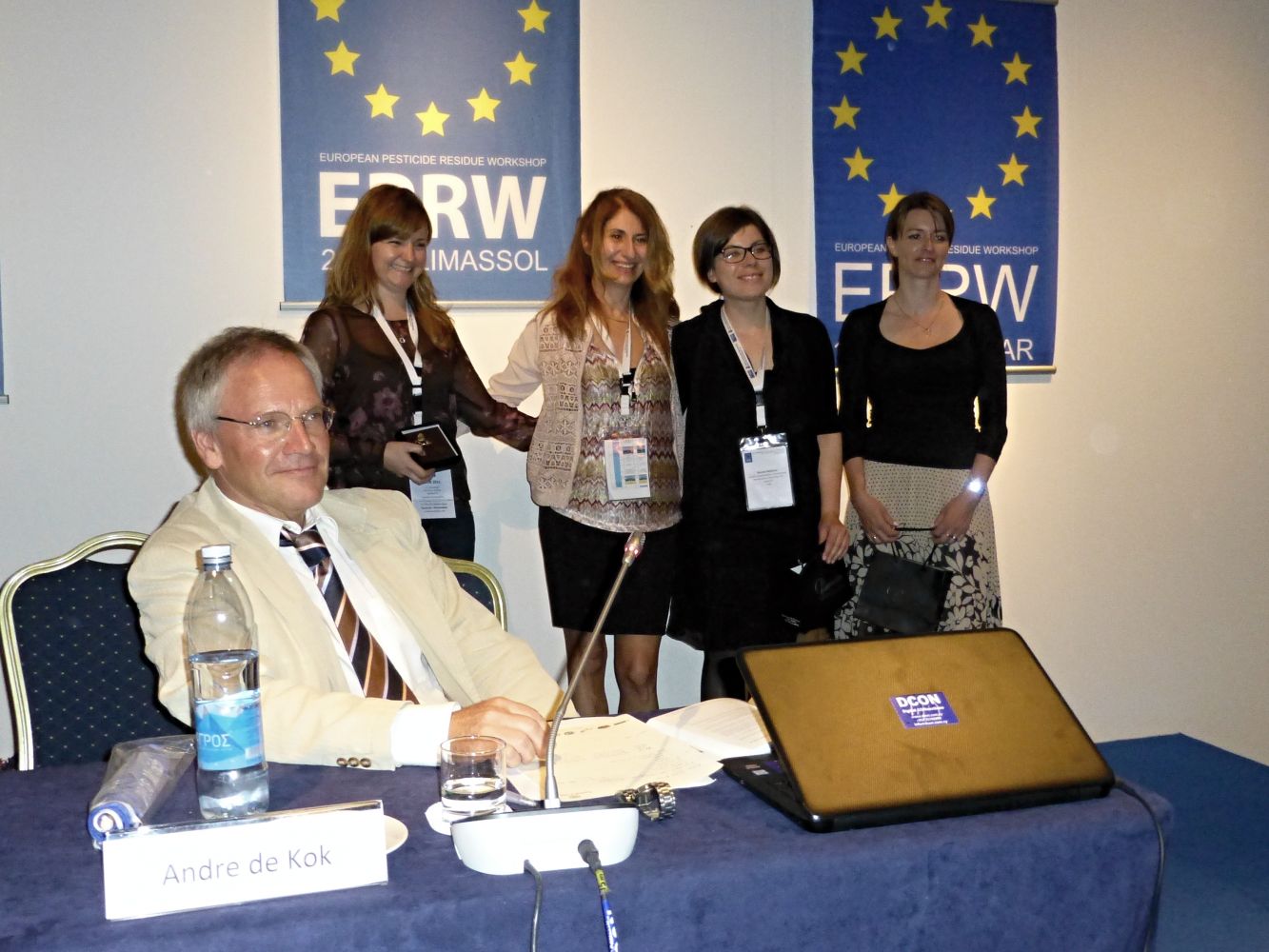
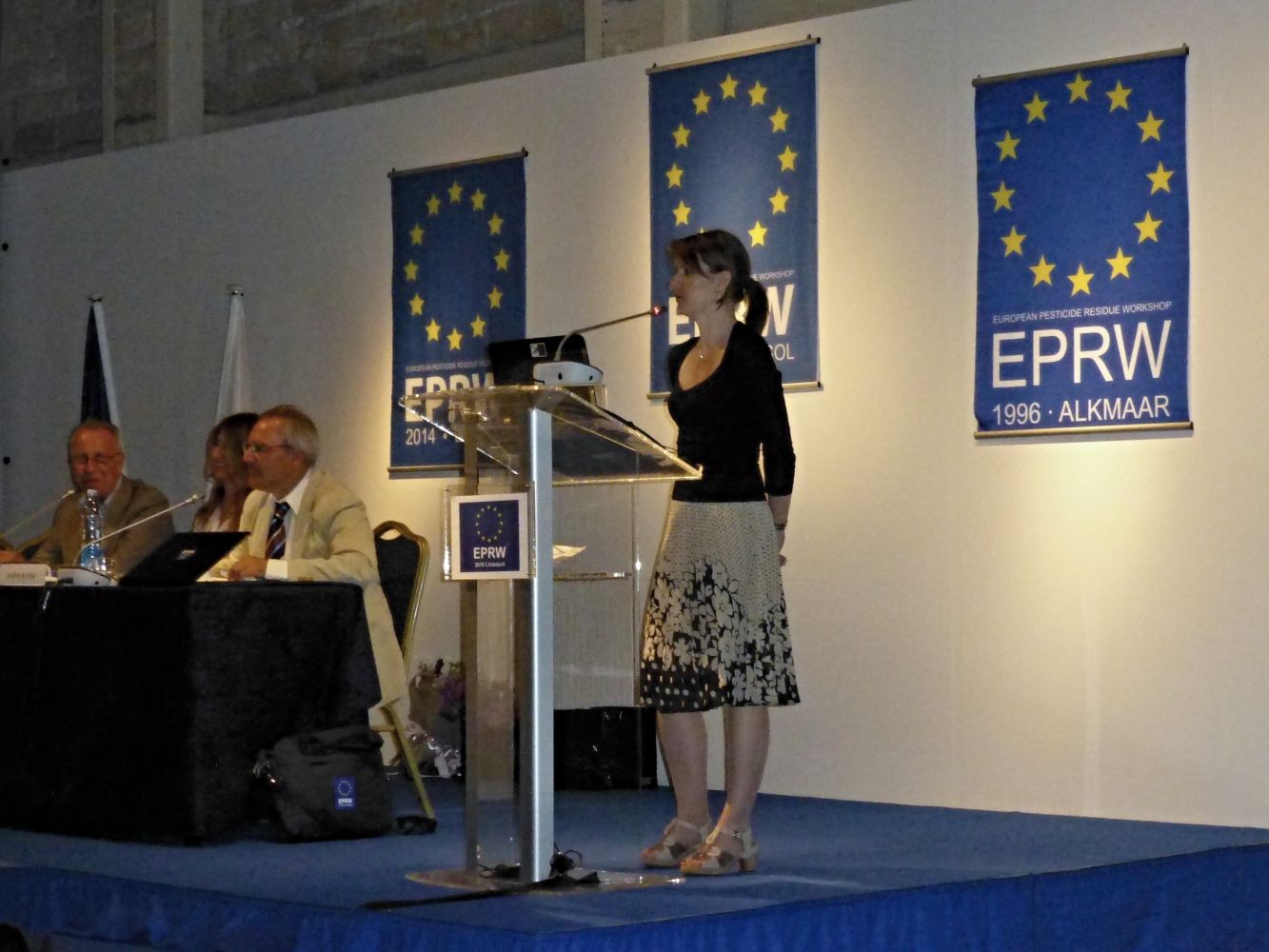
Dr. Marie Suchanova won Award for the scientific work in the field of pesticides at the 11th European Pesticide Residue Workshop (EPRW 2016, May 24th - May 27th 2016, Limassol, Cyprus). Topic of the work: Pesticide transformation products as markers of their unauthorized application in organic farming. Authors: Dana SCHUSTEROVÁ, Marie SUCHANOVÁ , Jana PULKRABOVÁ Jana ZUZÁNKOVÁ, Vít RUCKI , Jiří URBAN , Vladimír KOCOUREK, Jana HAJŠLOVÁ. Congratulations!
 Announcing MultiCoop
 25.2.2016, Prague - The University of Chemistry and Technology, Prague (UCT Prague); University of Natural Resources and Applied Life Sciences, Vienna; and Queens University, Belfast are launching the MultiCoop Project. Goals of this partnership are strengthening links between project partners. The project will include a series of training and mobility initiatives and will encourage publication of joint scientific papers.
The project will run from January 1, 2016, until December 31, 2018.
Main Coordinator is Prof. Jana Hajšlová in cooperation with Prof. Tomáš Ruml.
 EU commissioner Vytenis Andriukaitis visited our Department
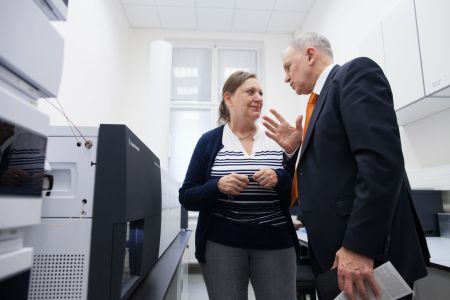
Mr. Vytenis Andriukaitis, EU commissioner for Health and Food Safety, visited our Department of Food Analysis and Nutrition during his short stay at UCT Prague.
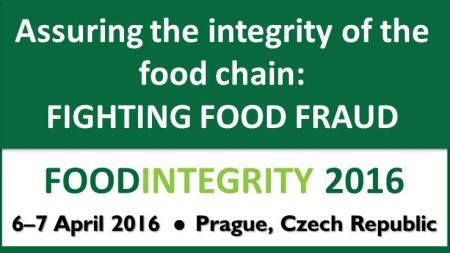 FOODINTEGRITY 2016
University of Chemistry and Technology, Prague, Department of food analysis and nutrition, is the main organizer of the international conference "Assuring the integrity of the food chain: Fighting food fraud (FOODINTEGRITY 2016)", organized in collaboration with Fera Science Ltd., UK.
The conference takes place on April 6 - 7, 2016, in Prague, in the conference center at the Diplomat Hotel.
This conference will focus on the latest research outputs on developments and strategies in the field of food integrity - safety, quality, authenticity and traceability, from the project and beyond, including:
- Tools for food integrity assessment
- Gaps in current research in food authenticity on topics
- Non targeted analysis
- Complex foods
- Transparency along the food chain
- Rapid methods
- Analytical tools for food authentication
- Demonstration how a European knowledgebase on analytical methodology and databases for food authenticity can be exploited by stakeholders
In addition, series of workshops will be organised to include:
- Food Crime, occurrence, motivations and mitigations
- Industrial perspective for strategies applied for assuring food authenticity
- Citizen science potential approaches to food integrity
- Authenticity of herbs and spices
On-site demonstration of the approaches for food authentication developed by the FoodIntegrity project, will also provide unique opportunity to discuss with FoodIntegrity experts the latest developments and strategies in the field of food integrity - safety, quality, authenticity and traceability.
Similarly, as for the conferences undertaken in the previous two years, for the FOODINTEGRITY 2016 it is anticipated participation of 150 to 200 scientists, representing academics, industry representatives, regulators, government and commercial laboratories, from more than 25 countries around the world, who will hear in the upcoming program about 45 lectures and watch 50 poster presentations.
Within the accompanying exhibition and the workshops, participants will have the opportunity to learn about the latest trends in modern instrumentation and other equipment used to assess the quality, safety and authenticity of food.
More information about the international conference FOODINTEGRITY 2016 is available on the website www.foodintegrity2016.eu.
Prof. Jana Hajšlová, PhD
Chair of the FOODINTEGRITY 2016 Organizing Committee
Topics of PhD Theses 2016/2017
Prof. Hajšlová Appointed to ICCI Board
Professor Dr. Jana Hajšlová has been appointed the Scientific Board of the International Cannabis and Cannabinoids Institute (ICCI), an international center for excellence dedicated to investigating and implementing clinical and basic research regarding cannabis and cannabinoids.
The Institute is a strategic alliance of universities (including Charles University, Hebrew University in Jerusalem, and Masaryk University in Brno), high-tech companies, and other organizations, including the American Chemical Society. Its headquarters is in Prague.
Source: http://zpravy.idnes.cz/v-praze-budou-zkoumat-konopi-icci-dlj-/domaci.aspx?c=A151215_140507_domaci_hro
As a member of the Scientific Board, Professor Hajšlová will link UCT Prague to the ICCI network and assist in leveraging research developments in this area.
The Institute is a strategic alliance of universities (including Charles University, Hebrew University in Jerusalem, and Masaryk University in Brno), high-tech companies, and other organizations, including the American Chemical Society. Its headquarters is in Prague.
Source: http://zpravy.idnes.cz/v-praze-budou-zkoumat-konopi-icci-dlj-/domaci.aspx?c=A151215_140507_domaci_hro
As a member of the Scientific Board, Professor Hajšlová will link UCT Prague to the ICCI network and assist in leveraging research developments in this area.
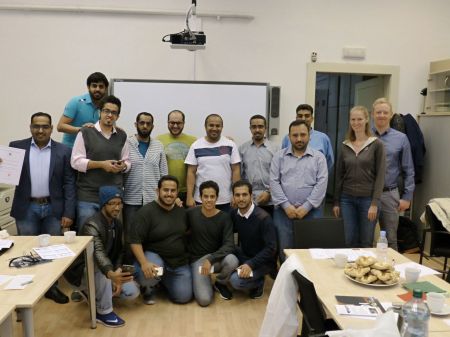 Another workshop for experts from Saudi Food and Drug Authority (SFDA)
In November (9th - 13th) our department organized another workshop for experts from Saudi Food and Drug Authority. The workshop was focused on mycotoxins and pesticide residues.
 Darina Lankova and Vojtech Hrbek visited the university in Argentina
Our Ph.D. students Darina Lankova and Vojtech Hrbek visited the National University of Littoral UNL, Faculty of Chemical Engineering (FIQ), in Santa Fe, Argentina. Their 3-weeks stay has been organized within the Program of Research and Analysis of Chemical Residues and Contaminants (PRINAC) under the auspices of Ministry of Science, Technology and Productive Innovation of the Argentinean Republic (MINCyT) and the Ministry of Education, Youth and Sports (MEYS) from Czech Republic (Project MINCYT-MEYS N°ARC/14/09). Their research activities were focused on the development of the analytical methods for determination of pesticides in biological samples using LC–MS/MS technique. They have participated at the Seminar „Advanced analysis of food and biological samples“, where they presented main outcomes of their disertation thesis. Specifically, Ing. Darina Lankova dealt with the analysis of organohalogenated contaminants in biological samples and Ing. Vojtech Hrbek with the possibilities of usage of ambient mass spectrometry in food analysis.
More abou the visit see the National University of Littoral or the local press.
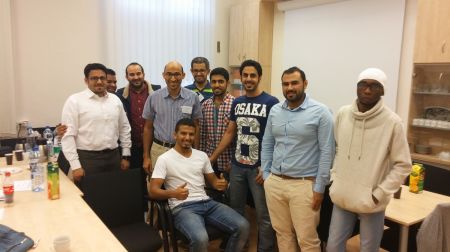 Workshop for SFDA experts
In September (7th - 11th) our department organised workshop for experts from SFDA (Saudi Food and Drug Authority).
 RAFA 20157th International Symposium on Recent Advances in Food Analysis, November 3 - 6 2015, Prague, Czech Republic





Symposia / Konference