



Food Chemistry and Elemental Analysis
The Maillard Reaction and Other Non-Enzymatic Browning Reactions in Foods
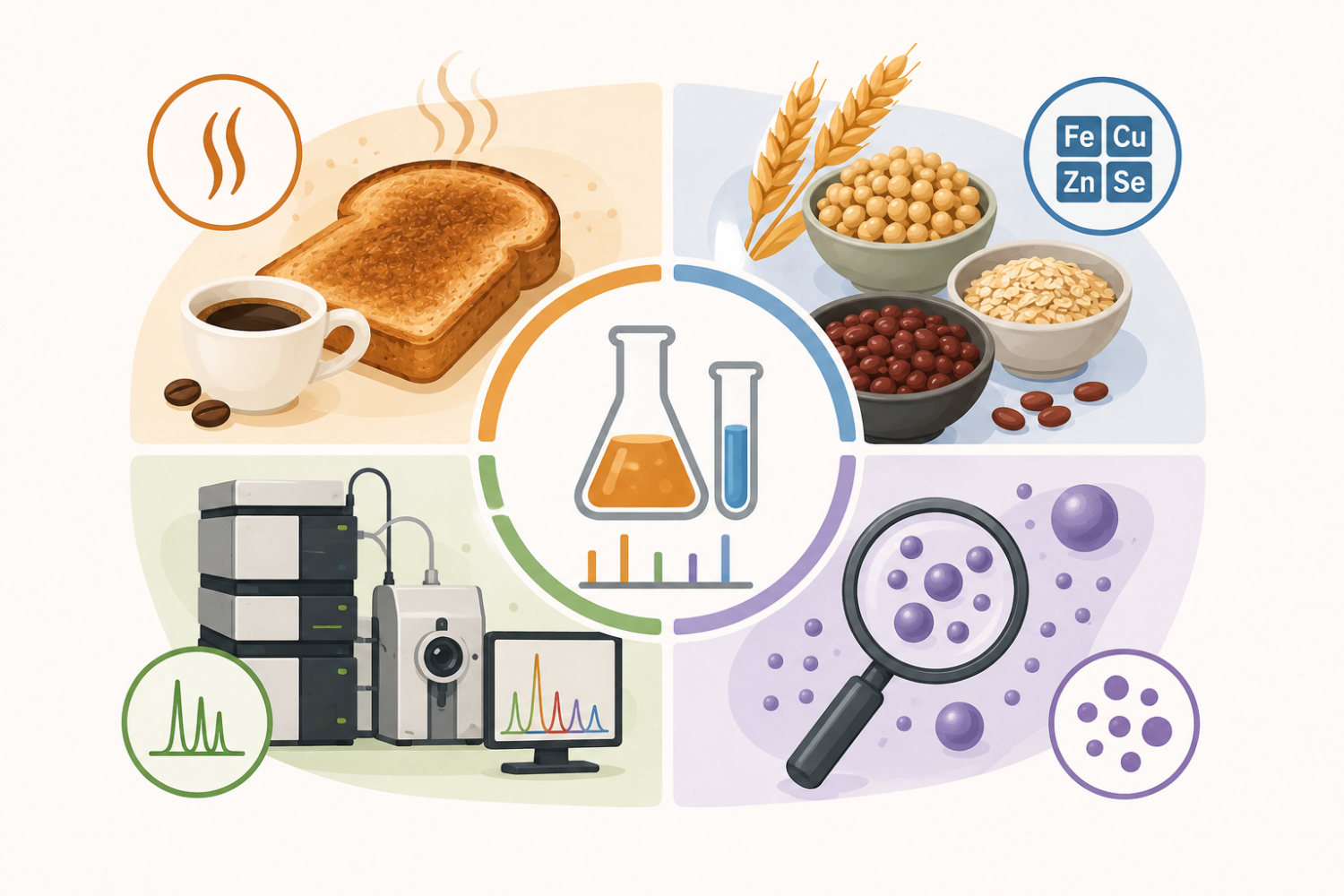
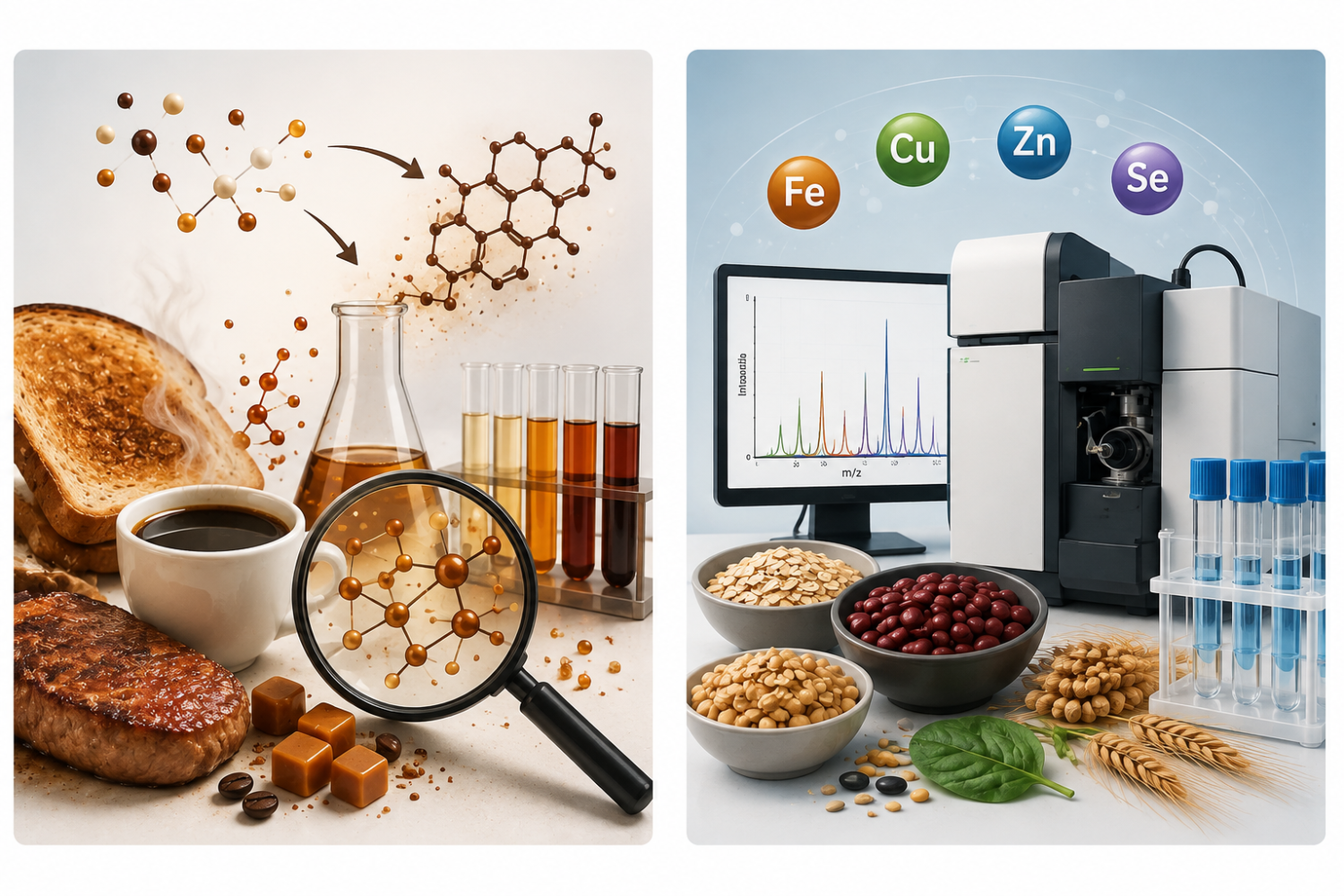
We study a range of aspects of non-enzymatic browning reactions – monitoring the formation of aromatic, colored, and biologically and redox-active products, monitoring sugar reactivity, and monitoring protein glycation. We focus in particular on key intermediates of these reactions, such as reductones and reactive carbonyl compounds. Among other things, we are interested in reducing the levels of carbonyl stressors during reactions with phenolic compounds and other food constituents.
Minerals and Trace Elements in Foods
We work on methodology for elemental analysis of biological materials (using AAS and ICP-MS) and monitor the content of essential and toxic elements in various foods. In addition to total content, we are also interested in the chemical forms of elements and changes in their content during food processing. We collaborate with the Atomic Spectrometry group at the Department of Analytical Chemistry, UCT Prague.
Elemental Speciation Analysis
Speciation analysis is the differentiated determination of individual forms (species, compounds) of a chemical element, or fractions of these forms, in a sample. Methodologically, we use a combination of various liquid chromatography techniques coupled with ICP-MS. In particular, we study fractions of iron, copper, zinc, and other elements in legumes, cereals, and pseudocereals, and their possible changes during raw material processing and food digestion, since the distribution of these fractions affects element bioavailability. We also work on speciation analysis of selenium and mercury.
Analysis of Inorganic Nanoparticles
In collaboration with the Atomic Spectrometry group at the Department of Analytical Chemistry, UCT Prague, we develop methods for determining silver nanoparticles in samples of biological origin. We use single-particle ICP-MS (sp-ICP-MS). Because of its fast measurement speed, the analysis records signals from individual particles, which are sorted by size; based on calibration, each is assigned a particle mass that can be converted to a diameter in nanometers. The result is data on the number and size distribution of particles in the sample. We are interested in changes in nanoparticle state that may occur during food processing and digestion.