






Food Authenticity, Quality and Adulteration
The research group develops and applies analytical methods to assess the authenticity, quality, and safety of foods, plant-based raw materials, and natural products. Its research addresses current challenges in food industry practice and supports control authorities, producers, distributors, and consumers.
Research topics
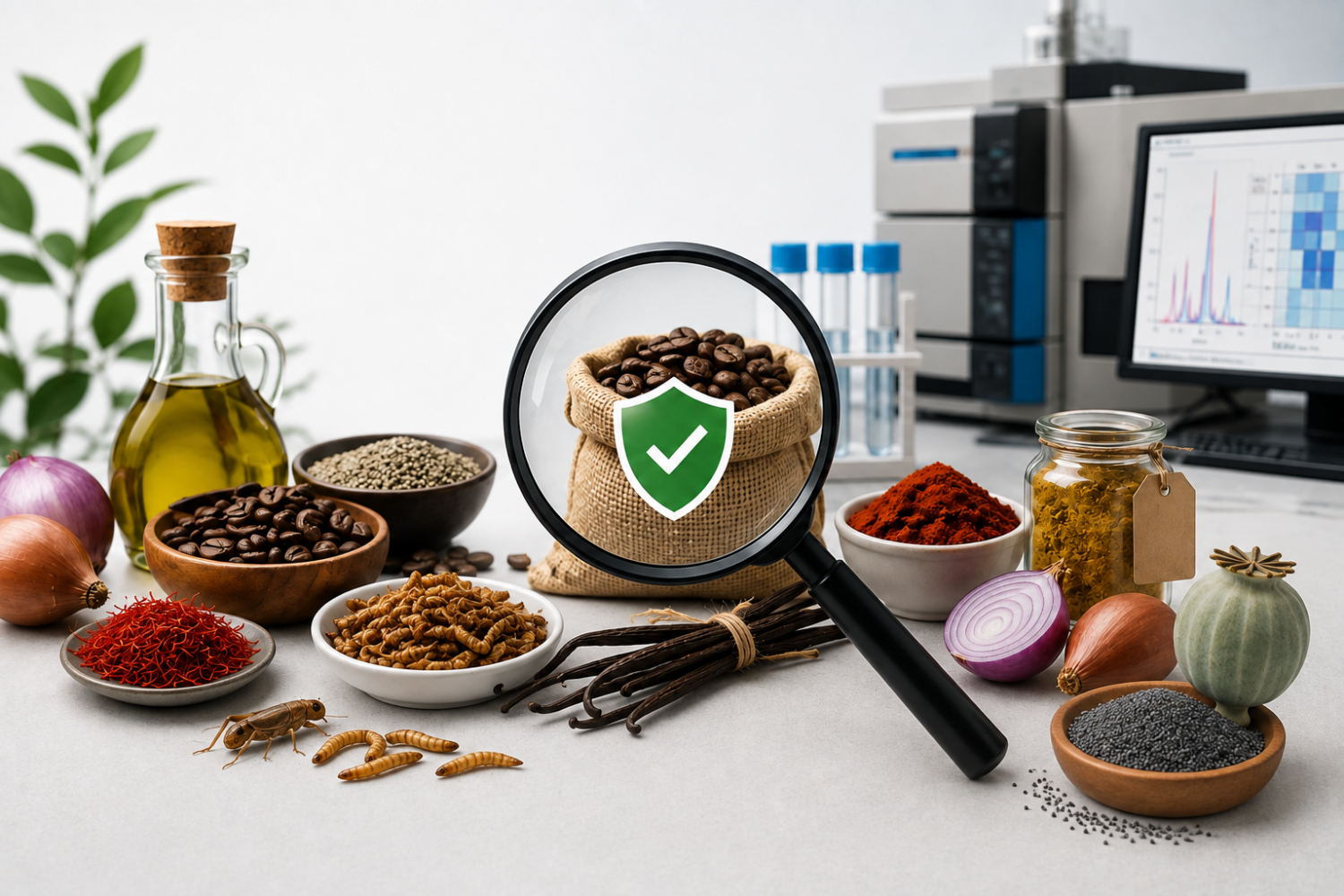
Food Authenticity and Fraud
To verify origin and authenticity, we analyse chemical profiles and specific markers using chromatographic and mass spectrometric methods. We compare suspect samples with authentic reference materials and screen for undeclared substances.
We focus in particular on:
- determining botanical, species, and geographical origin;
- distinguishing natural from synthetic components, and organic from conventional production;
- detecting substitution of declared raw materials;
- verifying undeclared active substances and additives;
- assessing the purity, quality, and processing methods of raw materials.
Cases addressed include, for example, the authenticity of coffee, saffron, shallots, spices, herbal teas, plant extracts, essential and vegetable oils, and vanilla flavouring.
The research also addresses the chemical composition of foods and raw materials and how processing affects their resulting quality. We monitor undesirable or undeclared substances, weed admixtures, and other indicators that may affect product safety, technological properties, or sensory value.
This work also includes analyses carried out in the accredited Metrology and Testing Laboratory, in response to requests from producers, distributors, consumers, and public administration authorities.
Novel Foods and Metabolomics
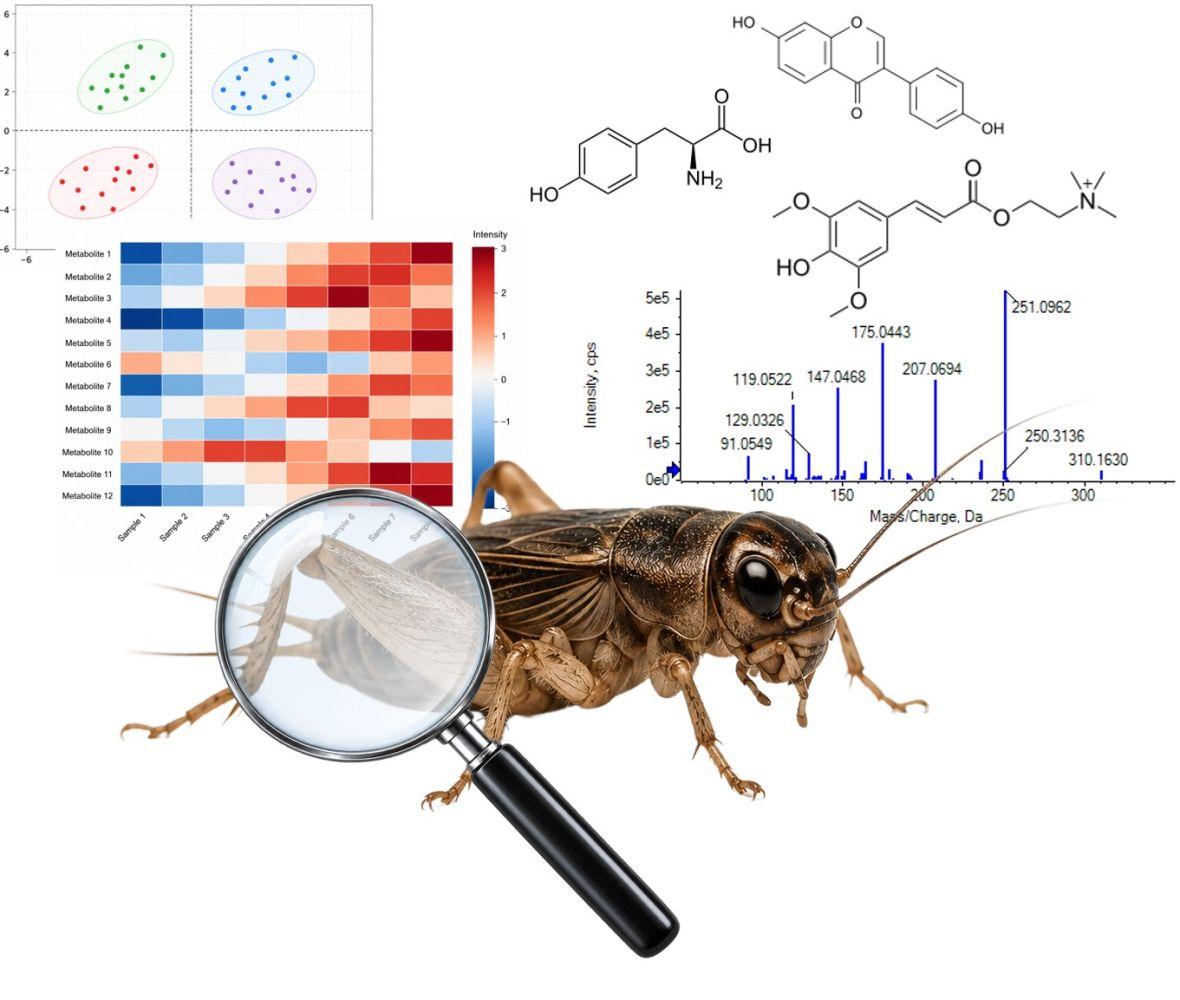
We use metabolomic approaches to characterise novel and alternative food sources. Edible insects are a major focus; we study how species, feed, and processing methods affect chemical composition, quality, and safety.
Using untargeted metabolomic fingerprinting, we search for markers to identify and verify the authenticity of individual insect species and their products. We also monitor the transfer of biologically active substances and natural toxins from feed into biomass.
Opium Alkaloids
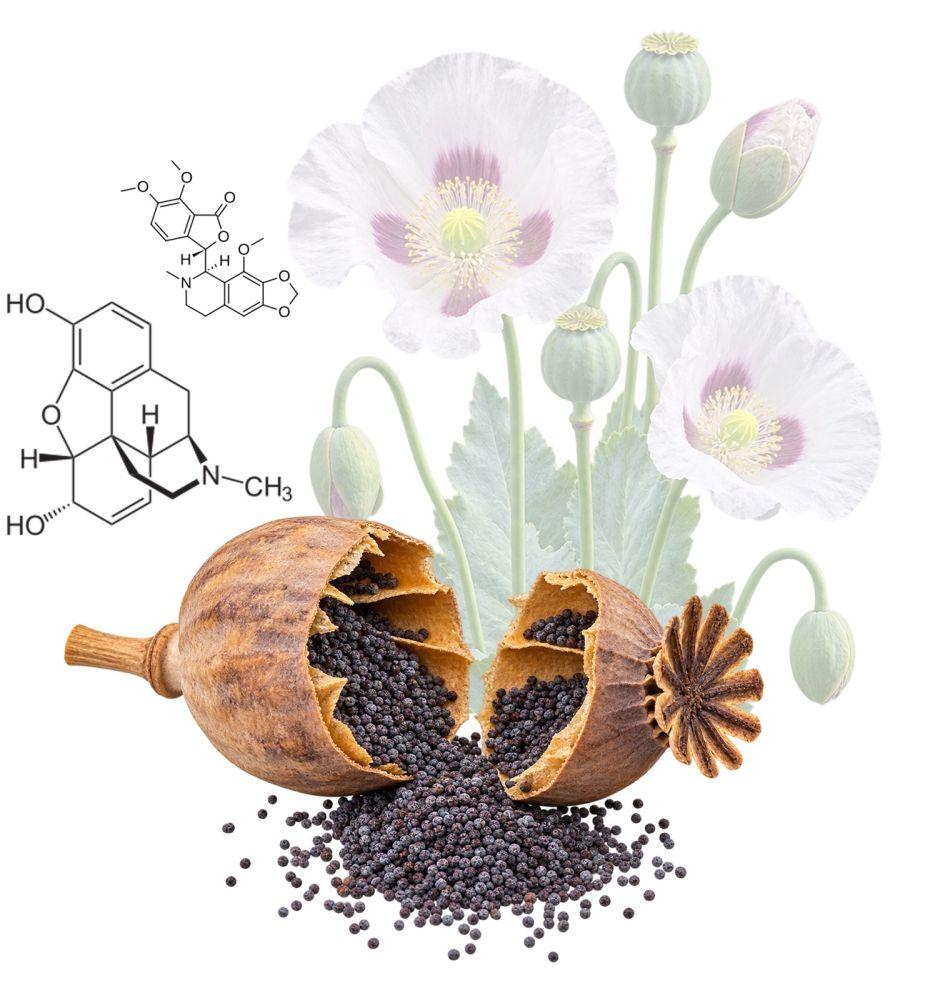
In poppy seeds (Papaver somniferum L.), we determine the main opium alkaloids, in particular morphine, codeine, thebaine, papaverine, noscapine, and oripavine. We study the effect of variety, harvest conditions, and post-harvest treatment – including cleaning and thermal stabilisation – on their content in seeds and poppy seed products.
The aim is to contribute to procedures that reduce opium alkaloid content while maintaining the required sensory and technological quality of food-grade poppy seed.
QL26020204 Comprehensive Strategy for a Reliable Authentication of Selected Plant-Based Food Commodities (Ministry of Agriculture; 2026 - 2029)
LUC25019 A comprehensive strategy for the safe production of nutritious edible insects (MSMT; 2025 - 2028)
TN02000044: Biorefining and circular economy for sustainability (TACR; 2023-2028)
Schusterova D., Sebelova K., Rubas O., Stupak M., Hajslova J.: Effect of post-harvest cleaning of breadseed poppy (Papaver somniferum L.) on levels of pesticide residues and opium alkaloids. European Food Research and Technology 252 (2026): 63. (doi: 10.1007/s00217-025-04991-9)
Sebelova K., Rubas O., Benesova M., Tsagkaris A., Kocourek V., Hajslova J.: A simple strategy for the detection of an undeclared hydrothermal treatment of poppy seeds using FT-IR spectroscopy. European Food Research and Technology 252 (2026): 88. (doi: 10.1007/s00217-025-04963-z)
Sebelova K., Pospisil O., Kulma M., Kourimska L., Kuckova S., Pospiech M., Hajslova J.: Comprehensive evaluation of different insect species and edible insect-based products using metabolomics. Food Control 191 (2026): 112419. (doi: 10.1016/j.foodcont.2026.112419)